 BRAINCAKE
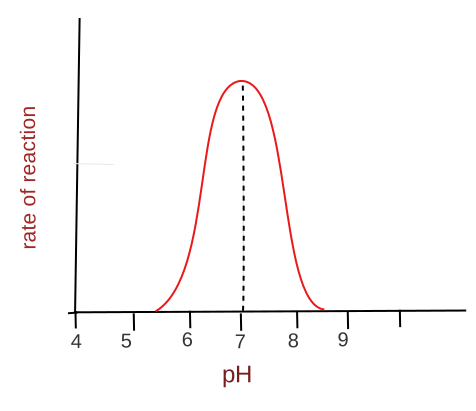
Effect of pH on Enzyme Action
The tertiary structure of the active site of the enzyme is determined by hydrogen and ionic bonds between -NH2 and -COOH groups and bonding and interactions between the R-groups.
Each enzyme has an optimum pH.
Since the pH is a measure of the hydrogen ion concentration, changes to the H+ concentration may alter the shape of the active site by:
Sign in free to see the rest of this lesson, the R.E.C.I.P.E. recall steps and the quiz
BrainCake is free. Make an account in seconds and pick up where this page stops.
Key terms in this lesson
- ionic bond
- A strong bond formed by the electrostatic attraction between oppositely charged ions.
- tertiary structure
- The further coiling and folding of a polypeptide into a specific three-dimensional shape, held by ionic bonds, hydrogen bonds and disulfide bridges between R-groups.
- active site
- The region of an enzyme, formed by the tertiary structure, with a shape complementary to its substrate, where the substrate binds.
- denaturation
- A permanent change to the tertiary or quaternary structure of a protein, caused by heat or pH extremes, that alters the shape of the active site so it is no longer complementary to its substrate.