 BRAINCAKE
Predator-Prey Relationships
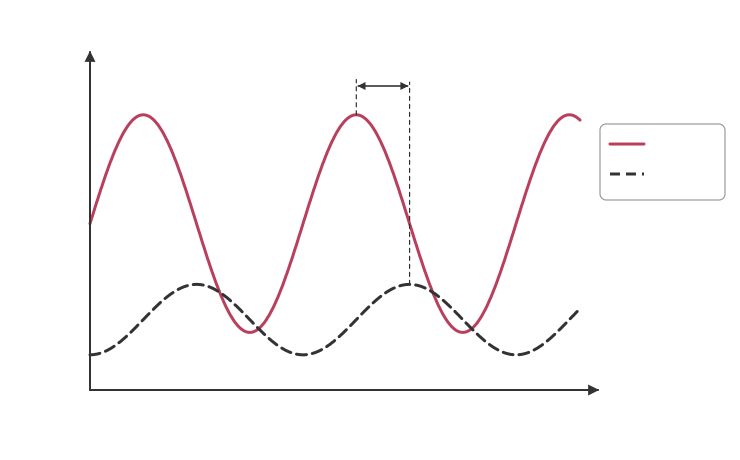
In a predator-prey relationship, the population sizes of the predator and the prey are linked, and they often rise and fall in regular cycles.
The cycle works like this:
1. When there are many prey, predators have plenty of food, so more predators survive and reproduce and the predator population increases.
2. More predators eat more prey, so the prey population decreases.
3. With less food available, predators compete more; more starve and fewer reproduce, so the predator population decreases.
4. With fewer predators, more prey survive and reproduce, so the prey population increases again, and the cycle repeats.
Sign in free to see the rest of this lesson, the R.E.C.I.P.E. recall steps and the quiz
BrainCake is free. Make an account in seconds and pick up where this page stops.
More in Populations and Sustainability
- Population Size
- Carrying Capacity
- Limiting Factors of Population Size
- Density-Dependent and Density-Independent Factors
- Interspecific Competition
- Intraspecific Competition
- Conservation
- Preservation
All 17 lessons in Populations and Sustainability · All OCR A-level Biology topics