A population is all the individuals of one species living in the same place at the same time. Its size changes as a result of four processes:• birth and immigration increase population size
• death and emigration decrease population sizechange in population = (births + immigration) − (deaths + emigration) When a species colonises a new area, its population usually follows a sigmoid (S-shaped) growth curve with three phases:
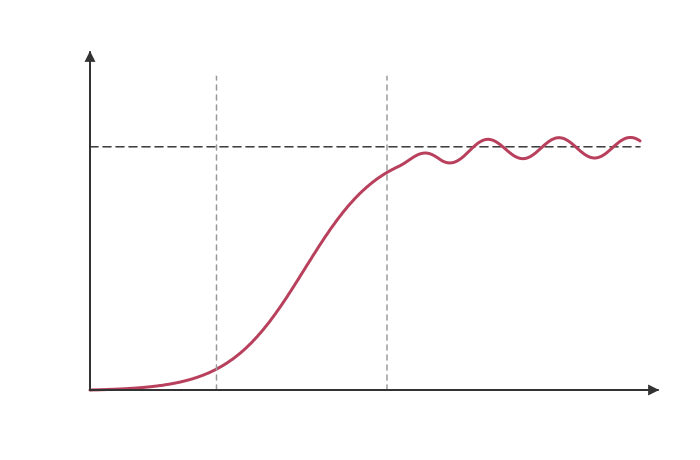
1. Lag phase: growth is slow because there are few individuals able to reproduce, and they may still be adapting to the environment (for example, reaching sexual maturity).2. Log (exponential) phase: resources such as food, space and light are plentiful, so the birth rate is much higher than the death rate and the population grows rapidly, doubling in equal time intervals.3. Stationary phase: limiting factors such as food shortage, predation and disease raise the death rate until it equals the birth rate. The population stops increasing and fluctuates around a roughly constant size.Worked example: a population of 500 rabbits has 120 births, 20 immigrants, 90 deaths and 30 emigrants in a year. Change = (120 + 20) − (90 + 30) = +20, so the new population is 520.
• death and emigration decrease population size