 BRAINCAKE
The Nitrogen Cycle
Nitrogen is needed to make amino acids, proteins, nucleic acids (DNA and RNA) and ATP. The atmosphere is about 78% nitrogen gas (N2), but plants and animals cannot use it directly because the triple bond is very strong. Plants take up nitrogen from the soil as nitrate ions (NO3−) or ammonium ions; animals get it by eating plants or other animals. Bacteria carry out the key steps.
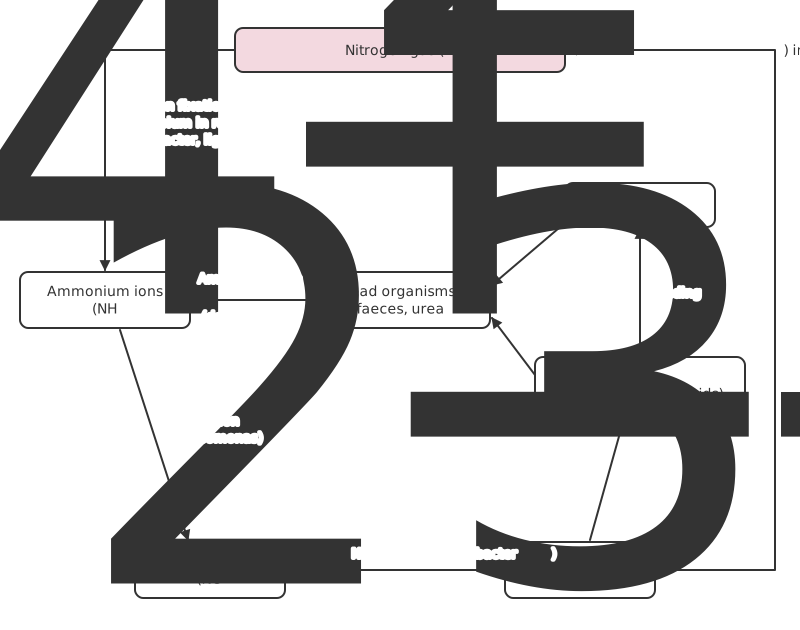
1. Nitrogen fixation: N2 is converted to ammonia (NH3), which forms ammonium ions (NH4+) in the soil. This is done by nitrogen-fixing bacteria, such as Rhizobium in root nodules and free-living Azotobacter. Lightning and the industrial Haber process also fix nitrogen.
Sign in free to see the rest of this lesson, the R.E.C.I.P.E. recall steps and the quiz
BrainCake is free. Make an account in seconds and pick up where this page stops.
More in Ecosystems
- Ecological Efficiency
- Calculating Efficiency of Biomass Transfer
- Human Activities and Biomass Transfer
- Decomposers
- Nitrogen-Fixing Bacteria
- Nitrification and Denitrification
- The Carbon Cycle
- Succession
All 21 lessons in Ecosystems · All OCR A-level Biology topics