Carbon is found in all organic molecules: carbohydrates, lipids, proteins and nucleic acids. The carbon cycle describes how carbon moves between the atmosphere, oceans, living organisms and rocks. Atmospheric carbon dioxide is only about 0.04% of the air, but it is the source of all the carbon in living things.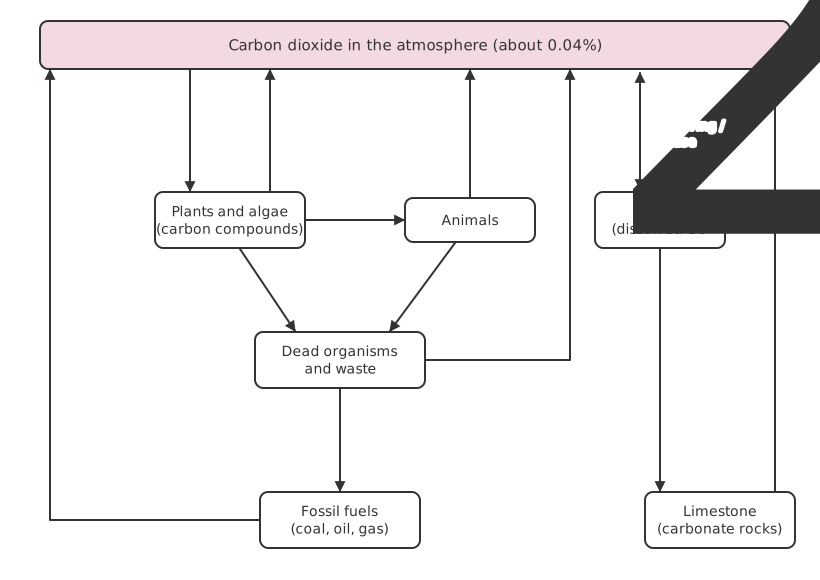
• Photosynthesis by plants, algae and cyanobacteria fixes CO2 into sugars. Carbon then passes along food chains when organisms are eaten.
• CO2 dissolves in the oceans. Some is used by marine organisms to make calcium carbonate shells, which can form limestone rock when they die and settle.Returning CO2 to the atmosphere
• Respiration by plants, animals and decomposers.
• Decomposition of dead organisms and waste by saprotrophic bacteria and fungi, which respire.
• Combustion of biomass and of fossil fuels (coal, oil and natural gas).
• Volcanic eruptions and the weathering of carbonate rocks.Long-term stores
If dead organisms do not decay fully, for example in waterlogged, anaerobic or acidic conditions, their carbon becomes buried. Over millions of years it forms fossil fuels. Limestone and the deep oceans are also huge stores.Changes in atmospheric CO2
CO2 concentration rises and falls each year because photosynthesis is faster in summer. Over the long term it is rising, mainly because of the combustion of fossil fuels and deforestation, which removes photosynthesising trees and often involves burning.