 BRAINCAKE
Primary Succession
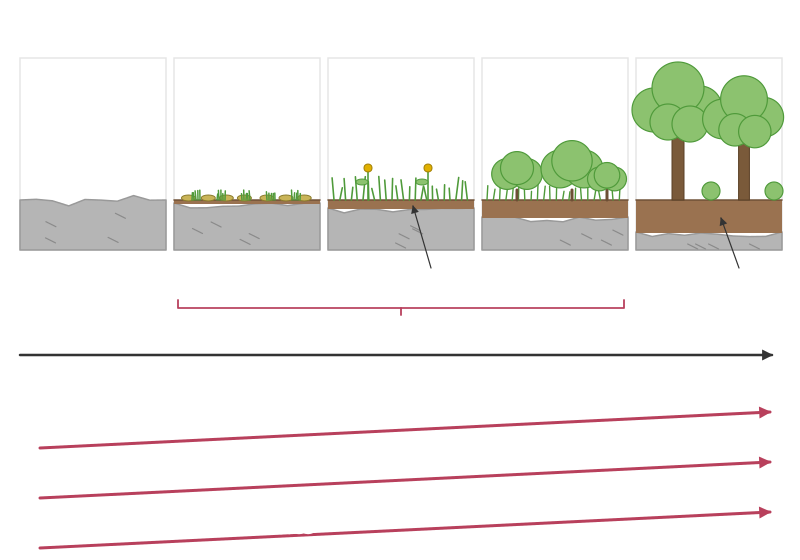
Primary succession is succession that starts on newly formed or newly exposed land where there is no soil, for example bare rock after a volcanic eruption, rock exposed by a retreating glacier, or newly formed sand dunes.
The first organisms to colonise are pioneer species such as lichens, mosses and algae (marram grass on sand dunes). They are adapted to harsh abiotic conditions: they tolerate drought, extreme temperatures and a lack of nutrients, and they produce many easily dispersed spores or seeds. Lichens also release acids that help weather rock.
Sign in free to see the rest of this lesson, the R.E.C.I.P.E. recall steps and the quiz
BrainCake is free. Make an account in seconds and pick up where this page stops.
Key terms in this lesson
- seral stage
- One of the sequence of communities that replace each other during succession, from pioneer species to the climax community.
- climax community
- The final, stable community reached at the end of succession, which does not change further under the prevailing conditions.
More in Ecosystems
- Nitrogen-Fixing Bacteria
- Nitrification and Denitrification
- The Carbon Cycle
- Succession
- Secondary Succession
- Deflected Succession
- Sampling Distribution and Abundance
- Quadrats and Transects
All 21 lessons in Ecosystems · All OCR A-level Biology topics