 BRAINCAKE
Plasmodium spp.
Malaria is caused by protozoa of the genus Plasmodium ('spp.' means several species). Five species infect humans: P. falciparum, P. vivax, P. ovale, P. malariae and P. knowlesi. P. falciparum is the most dangerous and causes most malaria deaths, mainly in sub-Saharan Africa. P. vivax is widespread in Asia and South America.
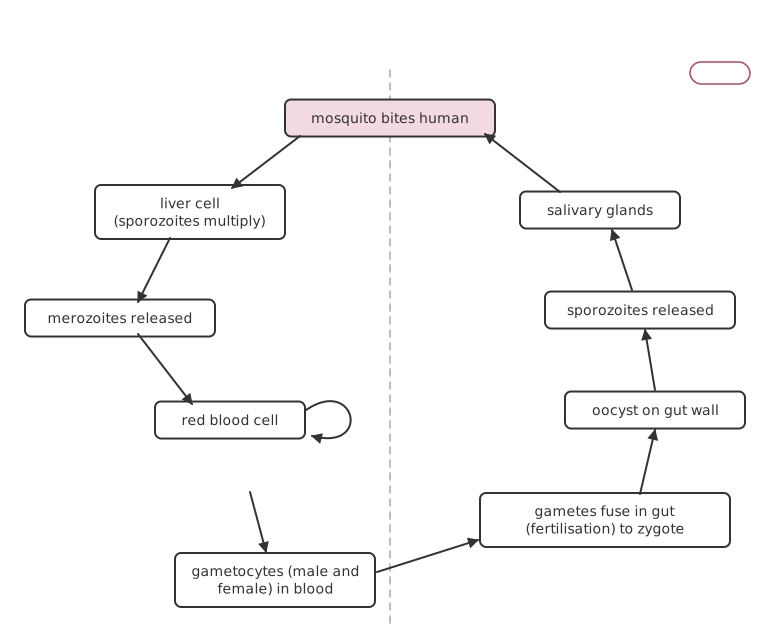
Plasmodium is a parasite with two hosts:
• the human, where it reproduces asexually
• the female Anopheles mosquito, the vector, where sexual reproduction takes place.
Sign in free to see the rest of this lesson, the R.E.C.I.P.E. recall steps and the quiz
BrainCake is free. Make an account in seconds and pick up where this page stops.
Key terms in this lesson
- vector
- An organism, usually an insect, that transmits a pathogen from one host to another without itself being harmed by it.
More in Viruses, Fungi and Protozoa
- Transmission of Stem Rust
- Pathogenic Effects of Stem Rust
- Treatment and Control of Stem Rust
- Protozoa as Pathogens
- Transmission of Malaria
- Pathogenic Effects of Malaria
- Endemic Diseases
- Treatment, Prevention and Control of Malaria
All 17 lessons in Viruses, Fungi and Protozoa · All Edexcel A-level Biology topics