 BRAINCAKE
Influenza
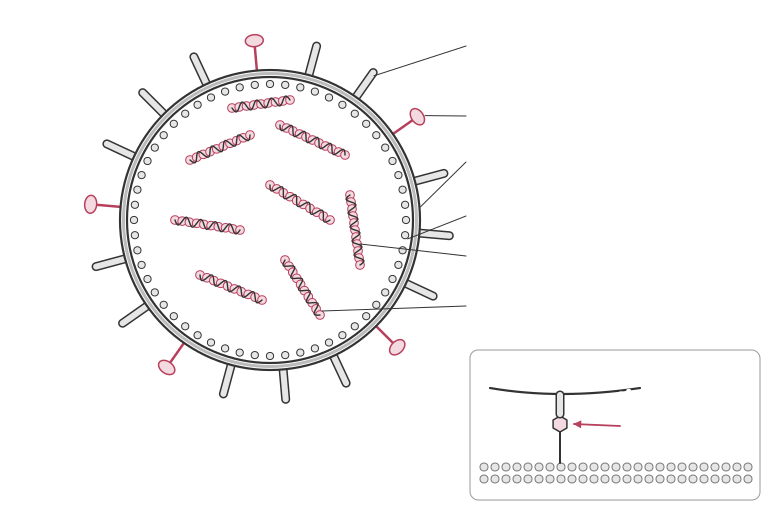
Influenza (flu) is caused by the influenza virus, an enveloped RNA virus. Its genome is single-stranded RNA split into eight separate segments, inside a protein capsid. This is surrounded by a lipid envelope taken from the host cell membrane.
Two glycoproteins project from the envelope:
• haemagglutinin (H), which binds to receptors containing sialic acid on the surface of the host cell, so the virus can attach and enter by endocytosis
• neuraminidase (N), an enzyme that cuts new virus particles free from the host cell so they can spread.
Sign in free to see the rest of this lesson, the R.E.C.I.P.E. recall steps and the quiz
BrainCake is free. Make an account in seconds and pick up where this page stops.
Key terms in this lesson
- endocytosis
- The process by which a cell takes in material from outside by engulfing it within a vesicle formed from the cell surface membrane.
More in Viruses, Fungi and Protozoa
- Viral Diseases
- Transmission of Influenza
- Pathogenic Effects of Influenza
- Treatment and Control of Influenza
- Fungi as Pathogens
- Puccinia graminis
- Transmission of Stem Rust
- Pathogenic Effects of Stem Rust
All 17 lessons in Viruses, Fungi and Protozoa · All Edexcel A-level Biology topics