Antibodies (immunoglobulins) are glycoproteins secreted by plasma cells. Each antibody binds specifically to one antigen.Structure
An antibody is made of four polypeptide chains: two identical long heavy chains and two identical short light chains, held together by disulfide bridges. This gives it quaternary structure and a Y shape.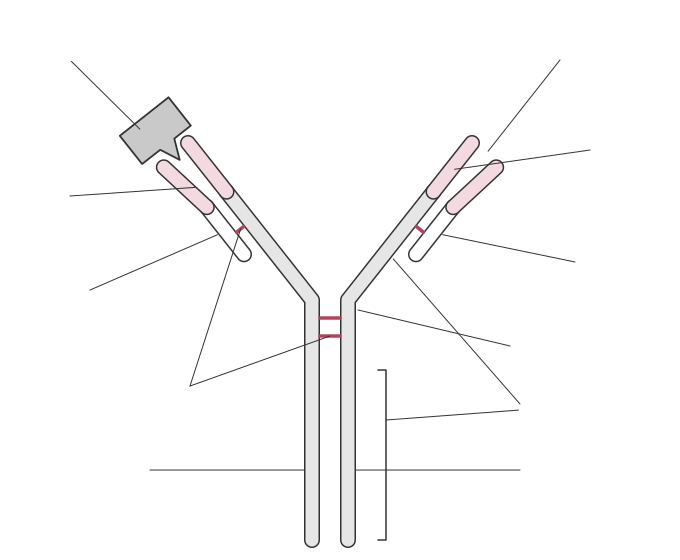
• The rest of the molecule is the constant region, which is the same in all antibodies of one class. It binds to receptors on phagocytes and can activate complement proteins.
• A flexible hinge region lets the arms move, so they can bind antigens at different distances apart.How antibodies work
• Agglutination: with two binding sites, each antibody links pathogens together into clumps, which cannot spread and are easier for phagocytes to engulf.
• Neutralisation: antibodies called antitoxins bind to toxins and block their effect; antibodies bound to viruses stop them attaching to host cells.
• Opsonisation: antibodies coat pathogens, labelling them for phagocytosis.
• Lysis: bound antibodies activate complement proteins, which make holes in bacterial membranes.The antigen and antibody fit together like a lock and key, forming an antigen-antibody complex.
An antibody is made of four polypeptide chains: two identical long heavy chains and two identical short light chains, held together by disulfide bridges. This gives it quaternary structure and a Y shape.
• The rest of the molecule is the constant region, which is the same in all antibodies of one class. It binds to receptors on phagocytes and can activate complement proteins.
• A flexible hinge region lets the arms move, so they can bind antigens at different distances apart.How antibodies work
• Agglutination: with two binding sites, each antibody links pathogens together into clumps, which cannot spread and are easier for phagocytes to engulf.
• Neutralisation: antibodies called antitoxins bind to toxins and block their effect; antibodies bound to viruses stop them attaching to host cells.
• Opsonisation: antibodies coat pathogens, labelling them for phagocytosis.
• Lysis: bound antibodies activate complement proteins, which make holes in bacterial membranes.The antigen and antibody fit together like a lock and key, forming an antigen-antibody complex.