Negative feedback is the process in which a change from the normal level (set point) of a factor is detected and causes responses that reverse the change, returning the factor to its normal level. It is the basis of homeostasis. The control of blood water potential by ADH is a clear example.When blood water potential falls (dehydration, sweating, salty food):
1. Osmoreceptors in the hypothalamus shrink and are stimulated.
2. Neurosecretory cells send impulses to the posterior pituitary, which releases more ADH.
3. More aquaporins are inserted into the collecting duct walls.
4. More water is reabsorbed and a small volume of concentrated urine is produced.
5. Blood water potential rises back to normal, so the osmoreceptors are stimulated less and ADH release falls.When blood water potential rises (after drinking a lot):
1. Osmoreceptors are stimulated less.
2. Less ADH is released.
3. Aquaporins are removed from the collecting duct walls.
4. Less water is reabsorbed and a large volume of dilute urine is produced.
5. Blood water potential falls back to normal.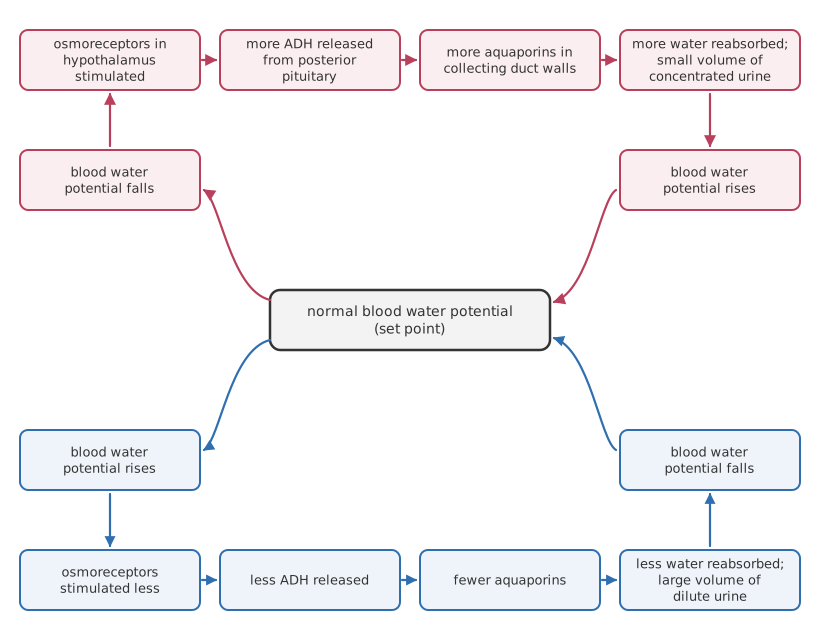
1. Osmoreceptors in the hypothalamus shrink and are stimulated.
2. Neurosecretory cells send impulses to the posterior pituitary, which releases more ADH.
3. More aquaporins are inserted into the collecting duct walls.
4. More water is reabsorbed and a small volume of concentrated urine is produced.
5. Blood water potential rises back to normal, so the osmoreceptors are stimulated less and ADH release falls.When blood water potential rises (after drinking a lot):
1. Osmoreceptors are stimulated less.
2. Less ADH is released.
3. Aquaporins are removed from the collecting duct walls.
4. Less water is reabsorbed and a large volume of dilute urine is produced.
5. Blood water potential falls back to normal.