 BRAINCAKE
ADH
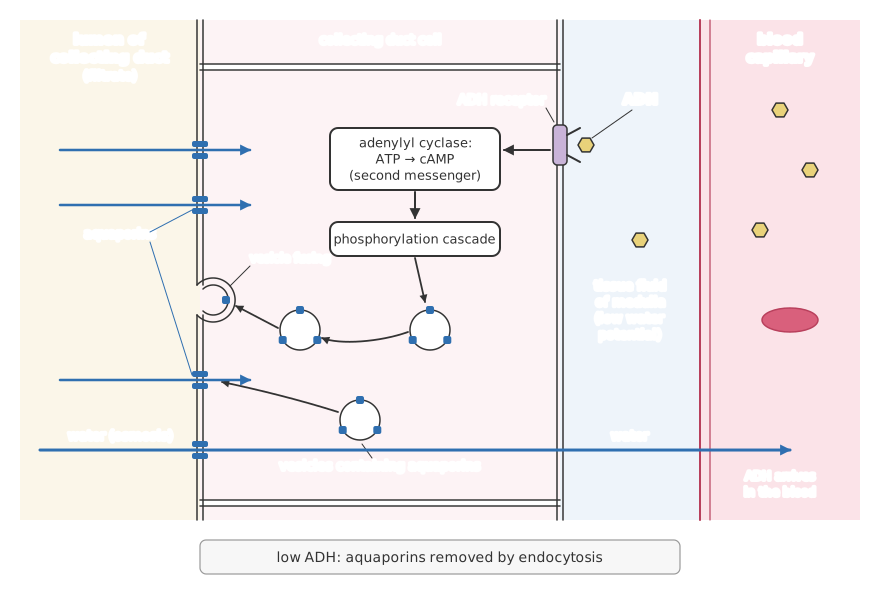
Antidiuretic hormone (ADH) increases the permeability of the collecting duct walls to water, so more water is reabsorbed and less urine is produced ('antidiuresis' means producing less urine).
How ADH acts on a collecting duct cell:
1. ADH travels in the blood and binds to specific receptors on the cell surface membrane of collecting duct cells (the membrane facing the blood).
2. This activates the enzyme adenylyl cyclase, which makes cyclic AMP (cAMP) from ATP. cAMP acts as a second messenger.
3. cAMP activates a series of enzyme-controlled reactions (a phosphorylation cascade).
4. Vesicles in the cytoplasm, whose membranes contain water channel proteins called aquaporins, move to the membrane facing the lumen and fuse with it.
Sign in free to see the rest of this lesson, the R.E.C.I.P.E. recall steps and the quiz
BrainCake is free. Make an account in seconds and pick up where this page stops.
Key terms in this lesson
- aquaporins
- Water channel proteins in cell membranes whose number controls how permeable a membrane is to water.
More in Homeostasis
- Collecting Duct
- Urine
- Adaptations
- Control of Osmoregulation
- Negative Feedback Control
- Extra Feedback
- Diabetes Insipidus
- Thermoregulation
All 41 lessons in Homeostasis · All Edexcel A-level Biology topics