 BRAINCAKE
Meiosis and Genetic Variation
Meiosis is the type of cell division that produces gametes. One diploid cell divides twice to give four haploid cells, and these cells are genetically different from each other and from the parent cell. Meiosis creates this variation in two ways.
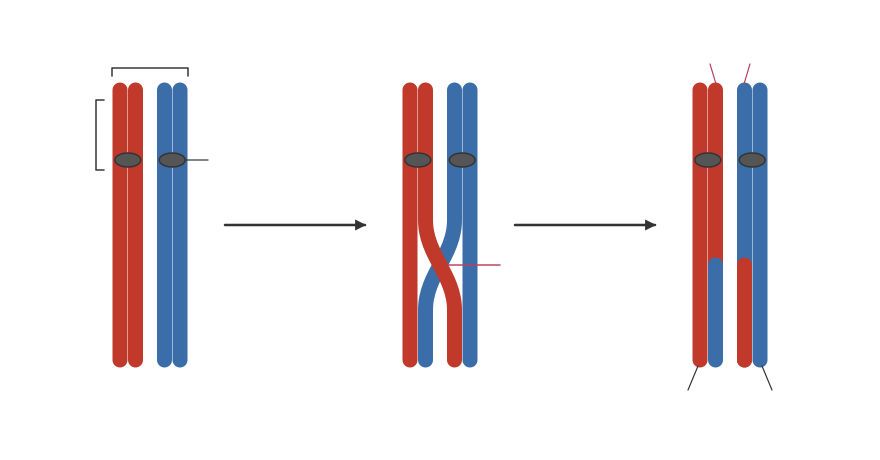
Crossing over happens in prophase I. Homologous chromosomes pair up, and non-sister chromatids wrap around each other. At points called chiasmata the chromatids break and rejoin, swapping sections of DNA. Each chromatid now carries a new combination of alleles, so alleles that were on the same chromosome can be separated.
Sign in free to see the rest of this lesson, the R.E.C.I.P.E. recall steps and the quiz
BrainCake is free. Make an account in seconds and pick up where this page stops.
Key terms in this lesson
- homologous chromosomes
- A pair of chromosomes, one from each parent, that carry the same genes at the same loci.
More in Genetic Information
- Mutation and Genetic Variation
- Different Types of Mutation
- Random Fertilisation
- Genetics and Inheritance
- Alleles
- Polygenic Traits
- Monohybrid Crosses
- Test Cross
All 30 lessons in Genetic Information · All Edexcel A-level Biology topics