A dihybrid cross follows the inheritance of two characteristics, each controlled by a different gene, at the same time. Here the two genes are on different chromosomes, so they assort independently.Worked example: in peas, round seeds (R) are dominant to wrinkled (r), and yellow seeds (Y) are dominant to green (y). A pure-breeding round yellow plant (RRYY) is crossed with a wrinkled green plant (rryy). All the F1 are RrYy, round and yellow.Two F1 plants are crossed: RrYy × RrYy. Each parent makes four gamete types in equal proportions: RY, Ry, rY and ry. A 4 × 4 Punnett square gives 16 equally likely combinations. Collecting the phenotypes gives: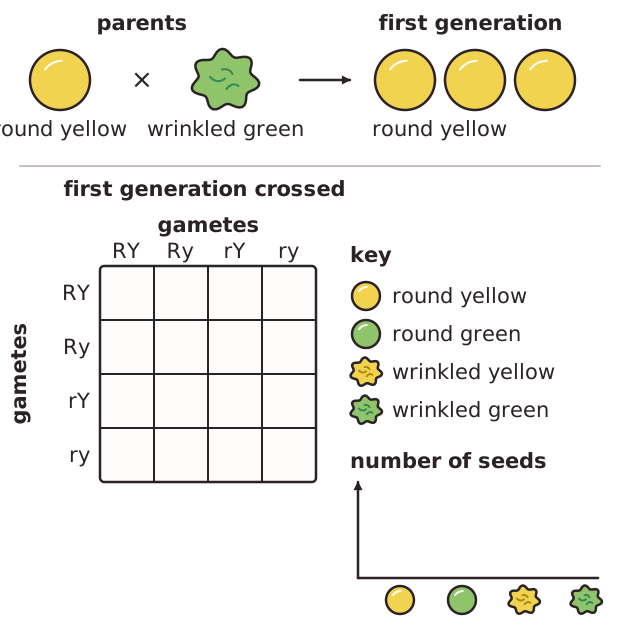
9 round yellow : 3 round green : 3 wrinkled yellow : 1 wrinkled green The 9 : 3 : 3 : 1 ratio is the expected result of crossing two individuals heterozygous for both genes. The 9 have at least one dominant allele of each gene, the 1 is homozygous recessive for both.A quick check: each gene on its own still gives 3 : 1 (12 round : 4 wrinkled). Multiplying the two 3 : 1 ratios gives (3 : 1) × (3 : 1) = 9 : 3 : 3 : 1.A dihybrid test cross, RrYy × rryy, gives four phenotypes in a 1 : 1 : 1 : 1 ratio.Remember these are expected ratios. Real counts differ by chance, and a large departure may mean the genes are linked.