 BRAINCAKE
Phytochromes
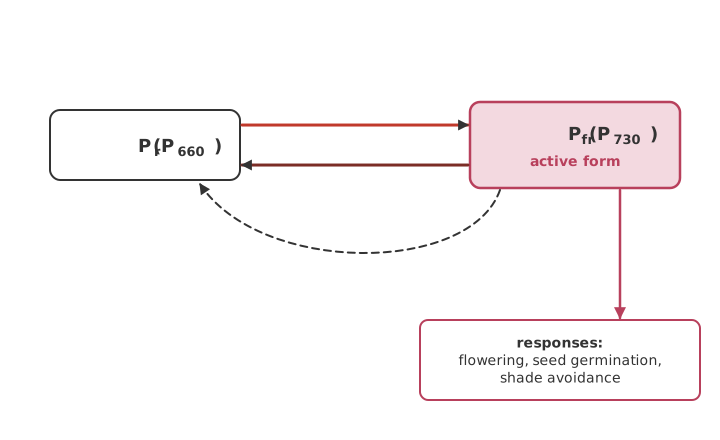
Phytochrome is a blue-green photoreceptor pigment found in small amounts in plant cells. It is a protein attached to a light-absorbing group. Phytochrome exists in two forms that can be converted into each other by light:
- Pr (also written P660) absorbs red light, with a peak at a wavelength of 660 nm.
- Pfr (also written P730) absorbs far-red light, with a peak at 730 nm.
When Pr absorbs red light it is quickly converted into Pfr. When Pfr absorbs far-red light it is quickly converted back into Pr. In the dark, Pfr slowly changes back into Pr.
Sign in free to see the rest of this lesson, the R.E.C.I.P.E. recall steps and the quiz
BrainCake is free. Make an account in seconds and pick up where this page stops.
Key terms in this lesson
- transcription factor
- A protein that binds to DNA near a gene and helps or prevents RNA polymerase binding to the promoter, switching the gene on or off.
More in Chemical Control
- Cytokinins
- Synergy and Antagonism
- Apical Dominance
- Sensory Systems in Plants
- Photoperiodism
- Long Day Plants
- Short Day Plants
- Day Neutral Plants
All 30 lessons in Chemical Control · All Edexcel A-level Biology topics