The sino-atrial node initiates a wave of excitation which spreads out across both atria. This causes both atria to contract simultaneously.Non-conducting tissue between the atria and ventricles called the atrio-ventricular septum prevents the wave of excitation spreading to the ventricles.The excitation wave reaches a group of cells called the atrio-ventricular or AV node in the septum between the two atria.After a short delay the AV node conducts the wave of excitation through the Purkyne fibres of the Bundle of His to the base of the ventricles.At the base of the ventricles the Bundle of His spreads out into smaller fibres in the walls of the ventricles.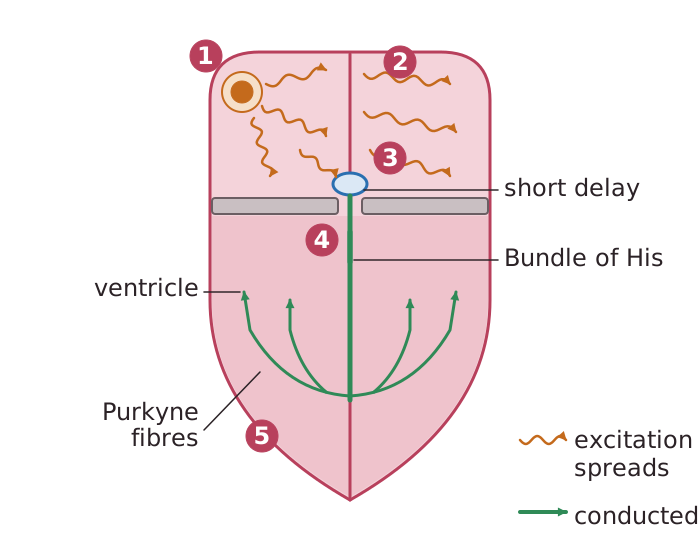 The ventricles contract from the base upwards.