 BRAINCAKE
Genetically Engineering Different Organisms
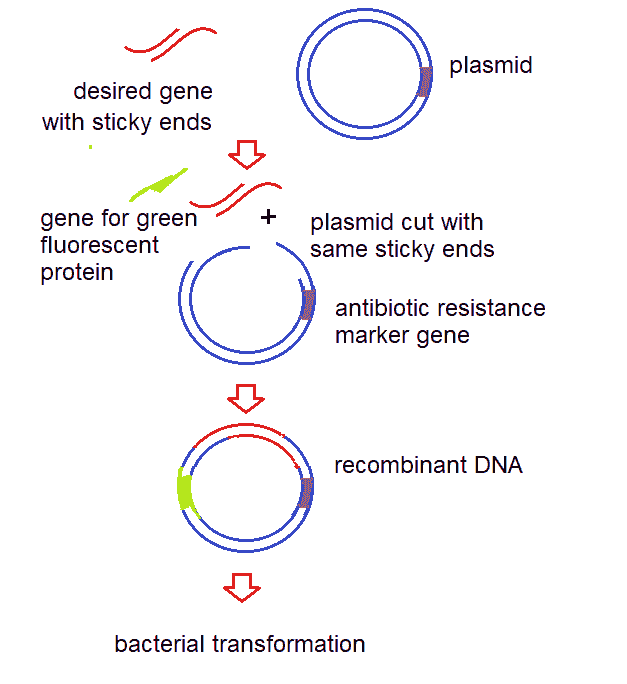
The human insulin gene has been engineered into E. coli to produce large quantities of human insulin. Growth hormone, clotting factors, antibiotics, industrial enzymes and vaccines have all been produced using recombinant DNA and genetic engineering in prokaryotes.
Sign in free to see the rest of this lesson, the R.E.C.I.P.E. recall steps and the quiz
BrainCake is free. Make an account in seconds and pick up where this page stops.
Key terms in this lesson
- plasmid
- A small, circular piece of DNA, separate from the main bacterial chromosome, often used as a vector in genetic engineering.
- recombinant DNA
- DNA formed by joining together DNA from two different organisms, for example a gene inserted into a plasmid vector.
- hormone
- A chemical messenger, secreted by an endocrine gland directly into the blood, that travels to target cells bearing complementary receptors and brings about a response.
- insulin
- A hormone secreted by the beta cells of the islets of Langerhans in response to a rise in blood glucose concentration, which lowers blood glucose by stimulating cells to take up and use or store glucose.
More in Genetic Engineering and Biotechnology
- Pathogens, DNA Barcoding
- Genomics and Proteomics
- Recombinant DNA
- Genetic Engineering
- Genetically Engineering Plants
- Ethical Concerns - microorganisms
- GM plants
- Patenting
All 17 lessons in Genetic Engineering and Biotechnology · All AQA A-level Biology topics