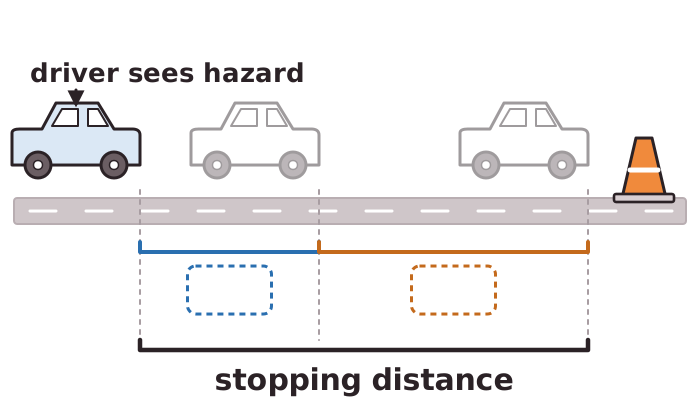
When a driver sees a hazard and stops the vehicle, the total distance travelled is the stopping distance. It is made up of two parts:
stopping distance = thinking distance + braking distance
- Thinking distance is the distance travelled during the driver's reaction time, between seeing the hazard and applying the brakes. The vehicle keeps moving at its original speed during this time, so thinking distance = speed × reaction time.
- Braking distance is the distance travelled after the brakes are applied until the vehicle stops. Friction at the brakes does work and transfers kinetic energy to the thermal energy store of the brakes.
Example: a car at 15 m/s with a reaction time of 0.6 s has a thinking distance of 15 × 0.6 = 9 m. If its braking distance is 14 m, the stopping distance is 9 + 14 = 23 m.