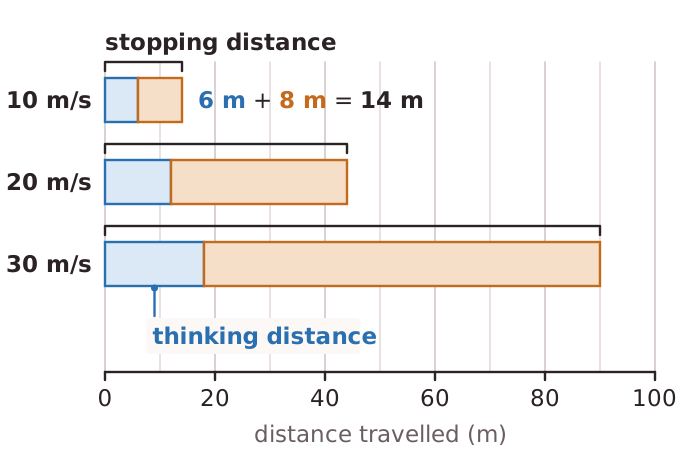
When a driver sees a hazard, the car does not stop at once. The stopping distance is the thinking distance plus the braking distance. Thinking distance is how far the car travels during the driver's reaction time, before the brakes are even pressed. It equals speed multiplied by reaction time, so for the same driver doubling the speed doubles the thinking distance.
Braking distance is how far the car travels after the brakes are applied. It grows much faster than speed: braking distance is proportional to the square of the speed, so doubling the speed makes it about four times bigger.
You can estimate stopping distances for a typical car and driver with a reaction time of 0.6 s on a dry road with good tyres and brakes:
- 10 m/s (about 22 mph): thinking 6 m, braking 8 m, stopping 14 m
- 20 m/s (about 45 mph): thinking 12 m, braking 32 m, stopping 44 m
- 30 m/s (about 67 mph): thinking 18 m, braking 72 m, stopping 90 m
At 30 m/s the car needs close to the length of a football pitch to stop. Tiredness, alcohol and distractions lengthen the reaction time, so they increase the thinking distance. Wet or icy roads and worn tyres or brakes reduce the braking force that can be used, so they increase the braking distance. These figures are estimates; real values change with the driver, the vehicle and the road.