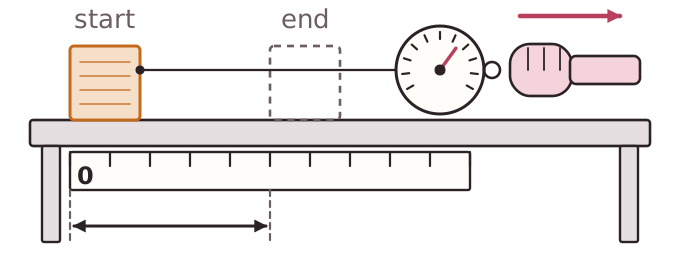
When a force moves an object, the force does work. The energy transferred is equal to the work done. Both are measured in joules (J). One joule is the work done when a force of one newton moves an object one metre in the direction of the force.
To measure the work done by a force, measure two things. Use a newtonmeter to measure the force, for example by pulling a block steadily along a bench, or by lifting a weight at a steady speed. Use a metre rule to measure the distance moved in the direction of the force. Then multiply the force in newtons by the distance in metres to get the work done in joules.
For example, a block pulled 0.50 m along a bench by a steady force of 4 N has 2 J of work done on it. Repeating the measurement and taking a mean makes the result more reliable.