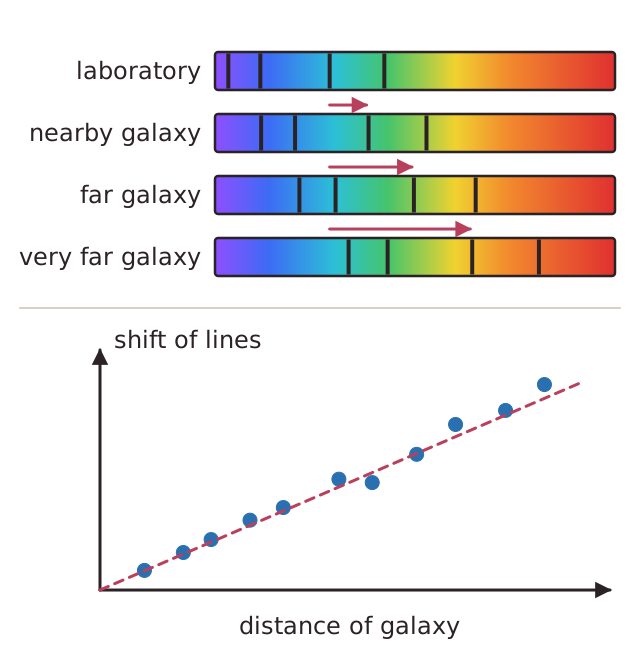
When astronomers split the light from a galaxy into a spectrum, they see dark lines at particular wavelengths. In light from almost all galaxies these lines are shifted towards the red end of the spectrum, which means the light has a longer wavelength and a lower frequency than expected. This is the red-shift, and it is the Doppler effect for light from a source moving away from us.
The amount of red-shift depends on how far away the galaxy is. Galaxies that are further from the Earth show a greater red-shift, which means they are moving away from us faster. Nearby galaxies have a smaller red-shift.
If you plot red-shift against distance for many galaxies, the points lie close to a straight line sloping upwards. This shows that red-shift increases as distance increases.