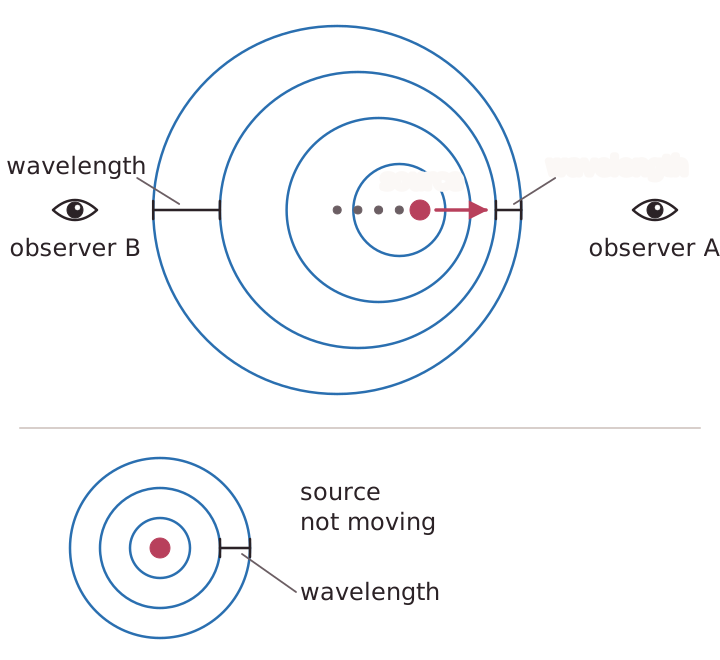
If a wave source and an observer are not moving relative to each other, the observer receives waves with the same frequency and wavelength that the source gives out. If the source is moving relative to the observer, the observed frequency and wavelength change. This is called the Doppler effect.
When a source moves towards an observer, each wave is emitted from a point closer to the observer than the one before. The waves are squashed together, so the observed wavelength is shorter and the observed frequency is higher. When a source moves away, the waves are stretched out, so the observed wavelength is longer and the observed frequency is lower.
The speed of the waves does not change, so when the wavelength gets shorter the frequency must get higher, and the other way round. The effect happens for sound and for light. An ambulance siren has a higher pitch as it comes towards you and a lower pitch as it moves away. For light, a source moving away shifts towards longer wavelengths.