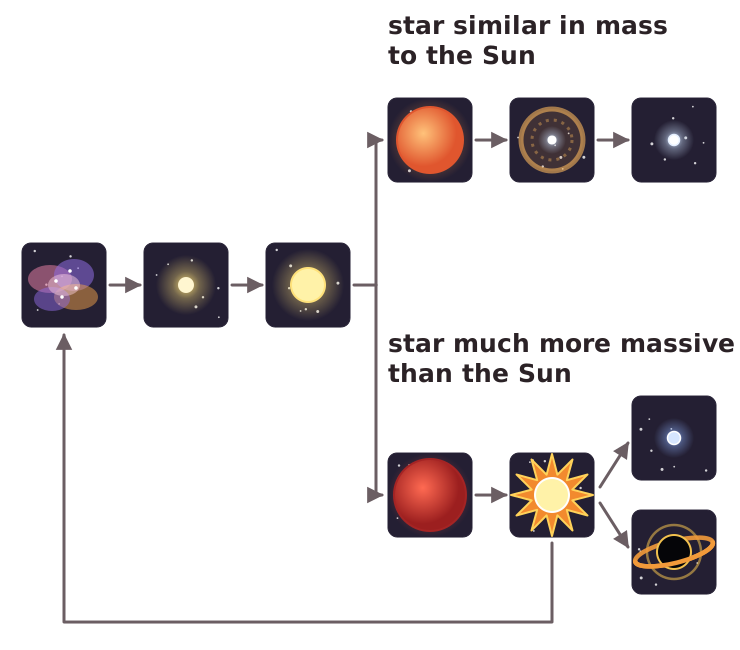
Stars form from a nebula, a huge cloud of dust and gas that is mostly hydrogen. Gravity pulls the material together. As it falls inwards it heats up and a protostar forms. When the core is hot and dense enough, hydrogen nuclei fuse to form helium and release energy. The star is now a main sequence star.
A star of similar mass to the Sun stays on the main sequence for billions of years, fusing hydrogen into helium in its core. When the hydrogen in the core runs low, the core shrinks and heats up while the outer layers expand and cool. The star becomes a red giant, much bigger than before and redder because its surface is cooler. Helium nuclei now fuse to form heavier elements such as carbon and oxygen.
Eventually the outer layers drift off into space. The core that is left is small, hot and very dense, and it is called a white dwarf. It no longer fuses nuclei, so it slowly cools and fades.