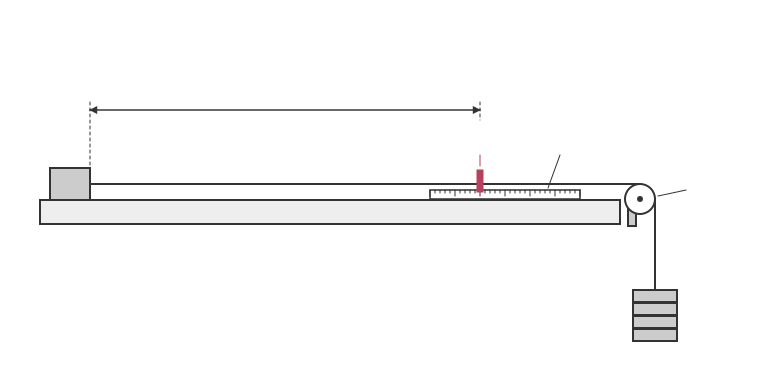
The Young modulus of a wire can be determined by applying a range of loads to it and calculating the extension of the wire.The diameter of a 1m wire is measured with a micrometer screw gauge at ten different points on the wire. The mean is calculated and used to calculate the cross-section area of the wire using π(diameter/2)2.The 1m length wire is clamped securely at one end, passed over a pulley and loaded with a range of slotted masses at the other end.The extension of the wire is measured by measuring the distance moved by a marker.The stress-strain values for each load are calculated from the means and used to plot a stress-strain graph.