 BRAINCAKE
Investigating Viscosity Changes with Temperature
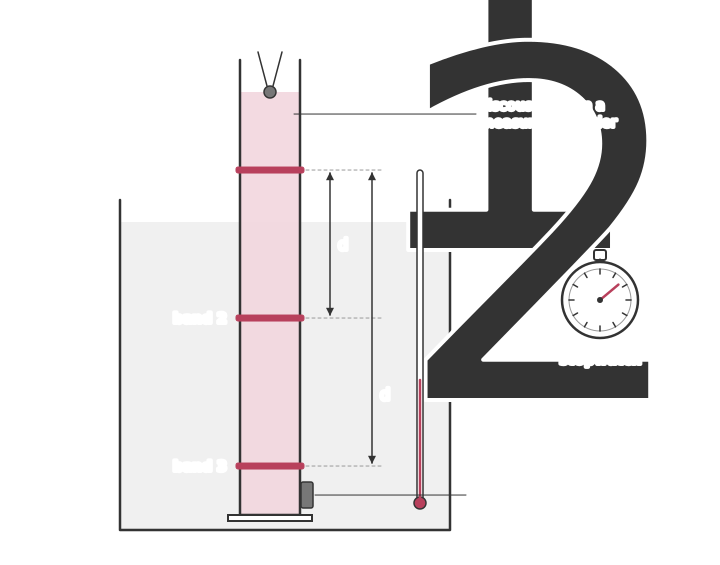
The viscosity can be calculated by allowing small spherical objects of known weight to fall through a fluid until they reach terminal velocity.
The masses of the balls are measured using a balance and the diameters of the balls are measured using Vernier callipers
The density of the balls is calculated using
Sign in free to see the rest of this lesson, the R.E.C.I.P.E. recall steps and the quiz
BrainCake is free. Make an account in seconds and pick up where this page stops.
Key terms in this lesson
- terminal velocity
- The maximum, constant velocity reached by an object falling through a fluid when the resultant force on it becomes zero.
- viscosity
- A measure of a fluid's resistance to flow, arising from internal friction between its layers.
More in Fluids
- Turbulent Flow
- Streamlining
- Viscosity
- Investigating Flow Rates
- Viscous Drag
- Stokes' Law
- Terminal Velocity
- Investigating Terminal Velocity
All 15 lessons in Fluids · All Edexcel AS-level Physics topics