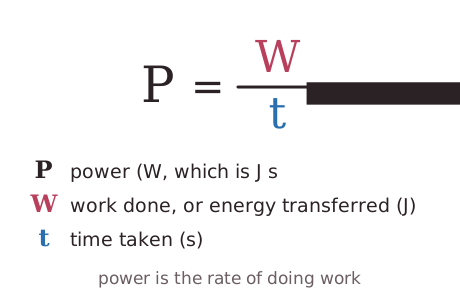
P = F v
motive power = force × velocityMotive Power:| energy per second wasted due to resistive force | + | gain of kinetic energy per second |
| energy per second wasted due to resistive force | + | gain of kinetic energy per second |
Read the text and highlight anything you think is important. When you go on, the text is hidden and you answer from memory.
Specification: AQA Physics (7407), AS-level, 3.4.1.7 Work, energy and power. Topic: Work, Energy and Power.
All 21 lessons in Work, Energy and Power · All AQA AS-level Physics topics
Every lesson in AQA AS-level Physics, with daily reviews and marked exam tests.
Try it for 7 days with no card.
Not sure yet? Try it first. No sign-up needed.
Already a member? Sign in.
We would like to use Google Analytics cookies to see which lessons help most. Nothing is set unless you accept. Privacy notice