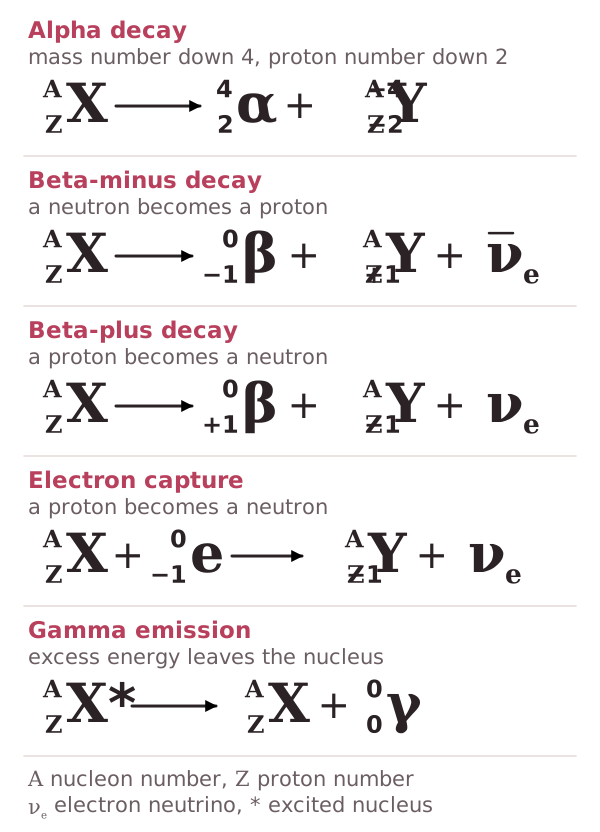
The intensity of gamma radiation emitted from a point source follows an inverse square law at an increasing distance away from a point. The energy of each photon is given by E = hf . If the number of photons per second is n then the total energy per second from the source is given by E = nhf. This spreads out so that the wavefront at any one instant is a sphere with the source at its centre. The surface area of this sphere is given by 4πr2 and the total energy spreads out over this surface.Gamma radiation photons are in the order of MeV and are not deflected by either electric or magnetic fields. Gamma radiation can be stopped by several centimetres of lead and about 1m of concrete. It has a very weak ionising effect and its wavelength is constant for a given source.