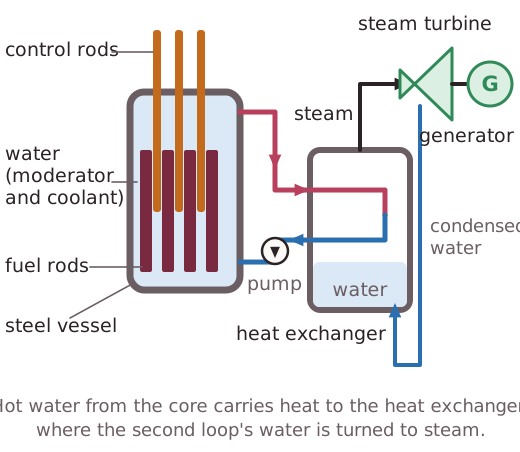
The thermal nuclear reactor in a nuclear power station contains uranium-235 fuel rods in a steel vessel called the reactor core. The fuel rods are surrounded by a moderator (water) to slow down the neutrons. Control rods made of boron or cadmium absorb any spare neutrons and slow the reaction down. Water is pumped into the reactor at high pressure where it is used as a coolant. The water is heated and then passed through a heat exchanger where it is used to produce steam that can turn a steam turbine and generate electricity.Naturally occurring uranium is 99.5% uranium-238. The fuel rods are made up of enriched uranium which is 2-3% fissionable uranium-235. The mass of uranium must be greater than the critical mass or some neutrons escape without causing fission.