 BRAINCAKE
Latent Heat
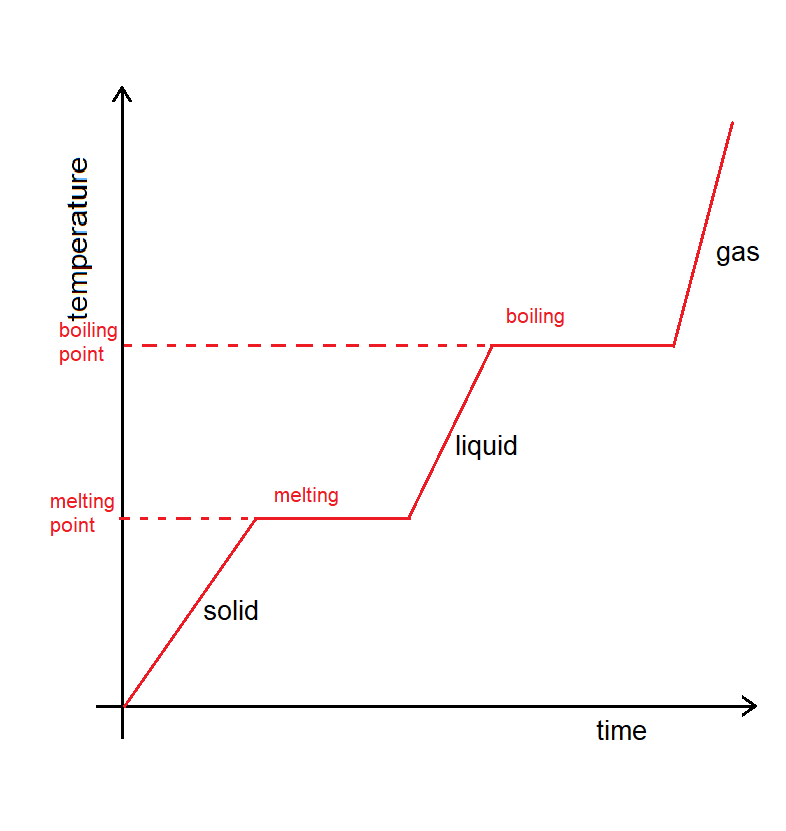
When a solid is heated, its atoms gain kinetic energy, vibrate more as a result the internal energy of the solid increases. At its melting point the temperature does not rise because the energy supplied is used to break the atoms free from each other and turn the solid into a liquid.
The energy Q used to melt 1kg of solid without a change in temperature is known as the specific latent heat of fusion lf.
Sign in free to see the rest of this lesson, the R.E.C.I.P.E. recall steps and the quiz
BrainCake is free. Make an account in seconds and pick up where this page stops.
Key terms in this lesson
- Nuclear fusion
- The joining of two light nuclei to form a heavier nucleus, releasing energy provided the mass number of the product is less than about 56.
- Internal energy
- The sum of the randomly distributed kinetic and potential energies of the atoms or molecules in a body.
More in Thermal Physics
All 4 lessons in Thermal Physics · All AQA A-level Physics topics