 BRAINCAKE
Nucleophilic Substitution Reactions
The hydroxyl group of an alcohol can be replaced by a halogen atom. The reaction is often known as halogenation.
Chlorination of primary and secondary alcohols is carried out using phosphorus (V) chloride PCl5 at room temperature.
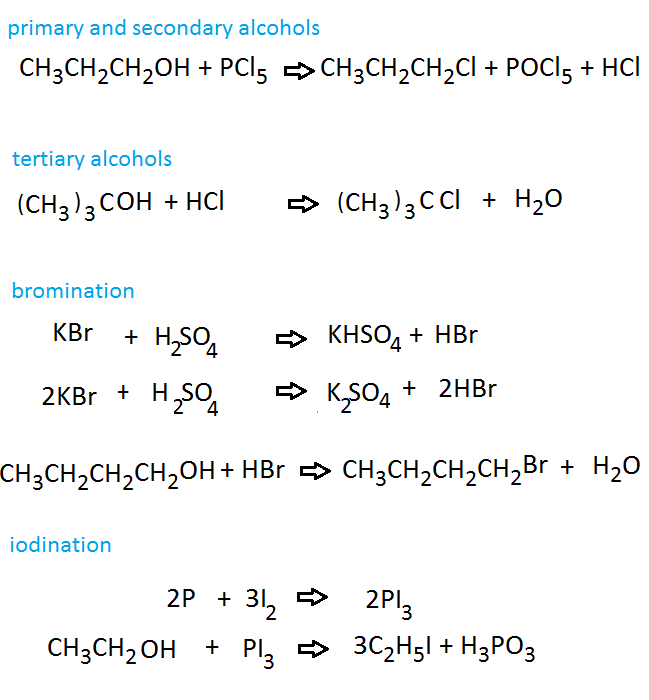
Sign in free to see the rest of this lesson, the R.E.C.I.P.E. recall steps and the quiz
BrainCake is free. Make an account in seconds and pick up where this page stops.
Key terms in this lesson
- nucleophilic substitution
- A reaction mechanism in which a nucleophile donates a lone pair of electrons to an electron-deficient carbon atom, displacing a leaving group.
More in Alcohols
- Alcohols
- Physical Properties
- Classifying Alcohols
- Combustion and use as Fuels
- Oxidation
- Dehydration of Alcohols
All 7 lessons in Alcohols · All OCR A-level Organic Chemistry topics