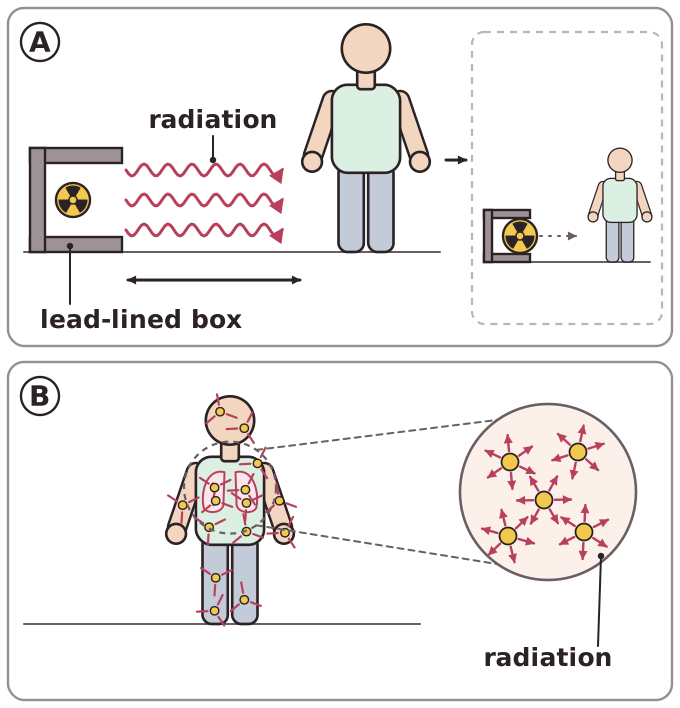
Contamination means that unwanted radioactive atoms have got on to or into an object or person. They might be on skin or clothes, or be swallowed or breathed in. The radioactive atoms stay there, so the object keeps emitting radiation until the atoms decay or are removed.
Irradiation means an object is exposed to radiation from an external source outside it. The radiation passes into the object, but no radioactive atoms are transferred. The object does not become radioactive, and the exposure stops when the source is taken away or shielded.
The hazards are different. Contamination is harder to stop, because the radioactive atoms are on or in the body and cannot simply be moved away. An alpha emitter inside the body is especially dangerous, because alpha radiation is highly ionising and all of its energy is absorbed by nearby cells, which can damage DNA and cause cancer. Outside the body, alpha radiation is stopped by skin or a few centimetres of air, so alpha irradiation is a much smaller risk. Beta and gamma radiation are more penetrating, so they can cause harm by irradiation from outside.
To reduce contamination, wear gloves and protective clothing, handle sources with tongs, and wash after work. To reduce irradiation, keep sources in lead-lined containers, stay as far away as possible, and limit the time of exposure.