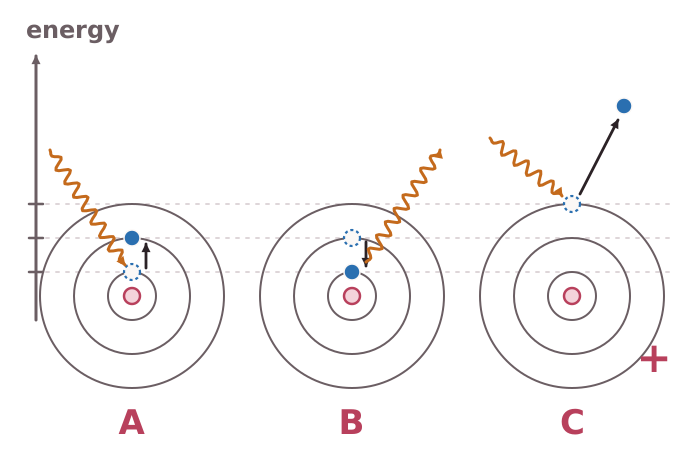
In an atom the electrons are arranged at different distances from the nucleus. Each distance is an energy level, and electrons further out have more energy. An electron can absorb electromagnetic radiation. If it absorbs the right amount of energy it moves to a higher energy level, further from the nucleus, and it is said to be excited.
An excited electron does not stay there. When it falls back to a lower energy level it emits the energy it lost as electromagnetic radiation. So the arrangement of electrons changes when radiation is absorbed or emitted.
If an atom gains enough energy, an outer electron can be removed from the atom completely, and the atom is ionised. This is called ionisation. The atom has lost a negative charge, so it becomes a positively charged ion.