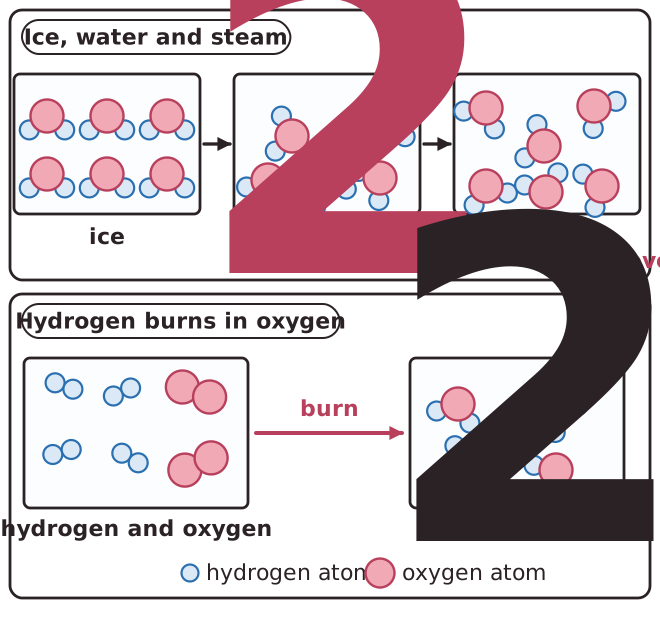
In a physical change the substances stay the same. Melting, freezing, boiling, condensing and dissolving are physical changes. The particles are only rearranged or separated, and no new substance is made. Because the particles themselves are unchanged, a physical change can usually be reversed, for example by cooling steam back to liquid water. Water is made of H2O particles in every state.
In a chemical change a chemical reaction happens and one or more new substances are made. The atoms in the original substances are rearranged into new combinations, so the particles in the products are different from the particles in the reactants. For example, when hydrogen burns in oxygen the H2 and O2 particles are replaced by H2O particles, which is water.
In both types of change no atoms are created or destroyed, so the total mass stays the same. The key difference is whether the particles themselves are changed. Signs of a chemical change include a colour change, a gas being given off or a temperature change, and it is usually much harder to reverse.