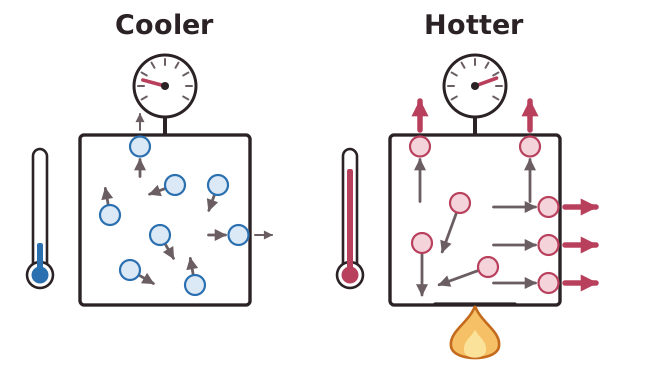
Imagine a fixed amount of gas sealed in a rigid container. The volume cannot change, so the volume is constant. The only things that can change are the temperature and the pressure of the gas.
As the gas is heated, its molecules gain kinetic energy and move faster. At constant volume, the faster molecules hit the walls more often and with greater force. The pressure of the gas therefore increases as its temperature increases.
The reverse is also true. If the gas is cooled, the molecules move more slowly, the collisions with the walls become weaker and less frequent, and the pressure decreases. This is a qualitative relationship: we say that pressure rises when temperature rises, without needing a calculation.
This explains why a sealed can left in a fire may burst, and why a car tyre has a higher pressure after a long journey. In both cases the gas is hotter but is trapped in a space that cannot get bigger. It also explains why a sealed rigid container of gas has a lower pressure when it is placed in a freezer.