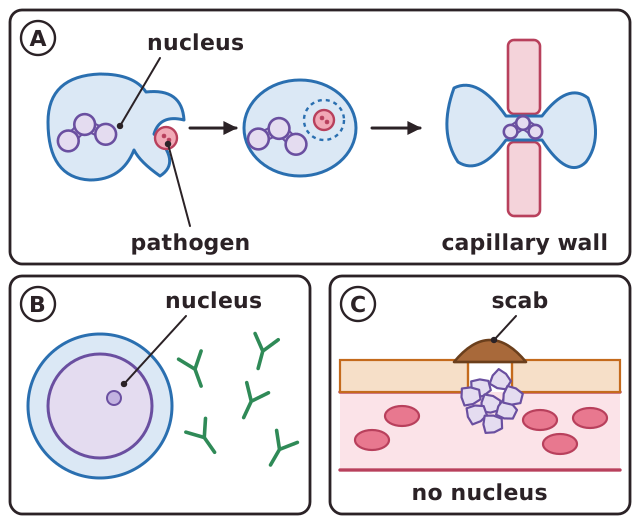
Blood contains cells that defend the body. White blood cells have a nucleus and come in two main types, phagocytes and lymphocytes. Each type is adapted to a different job. Platelets are not whole cells, they are small fragments of cells.
A phagocyte destroys pathogens by phagocytosis. Its flexible shape lets it flow around a pathogen and engulf it, and enzymes inside the cell then digest the pathogen. Its lobed nucleus lets it squeeze through gaps in capillary walls to reach an infection in the tissues.
A lymphocyte makes antibodies. Its large nucleus holds the genetic material needed to make them. The antibodies are released into the blood to help destroy pathogens.
Platelets have no nucleus. When a blood vessel is cut they clump together to form a clot, which dries into a scab. The clot seals the wound, so less blood is lost and pathogens cannot get in.