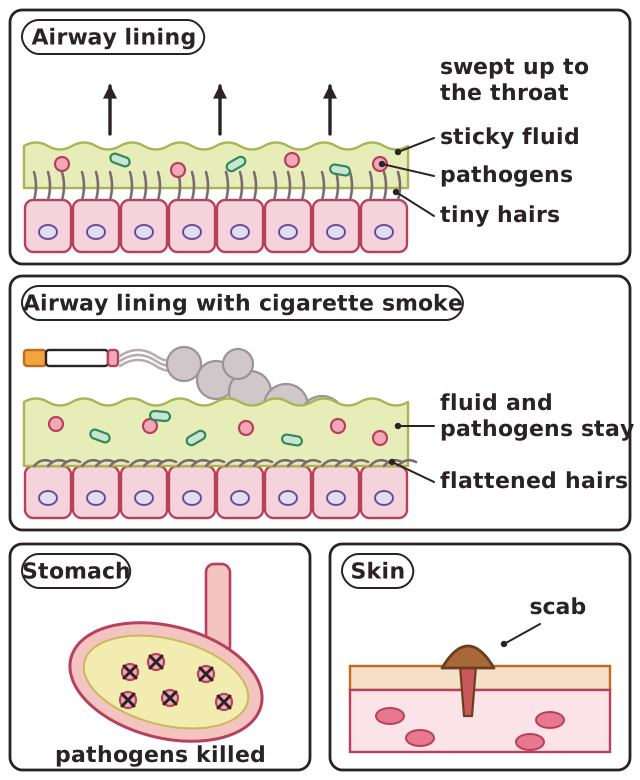
The body has defences that stop pathogens getting in, and others that deal with them once they are inside. Non-specific defences work in the same way against all pathogens. They do not need to recognise a particular type first.
The skin is a physical barrier that most pathogens cannot get through. If the skin is cut, platelets form a clot and then a scab to seal the wound. In the nose, hairs and sticky mucus trap pathogens from the air that you breathe in.
The trachea and bronchi are lined with cells that make mucus, and these cells also have tiny hairs called cilia. Pathogens stick to the mucus and the cilia sweep it up to the throat, where it is swallowed. Cigarette smoke can damage cilia, so smokers are less able to clear mucus from their airways.
The stomach makes hydrochloric acid. Pathogens that are swallowed with food, drink or mucus are killed by the acid. Any pathogens that do reach the blood or tissues are engulfed by white blood cells in a process called phagocytosis.