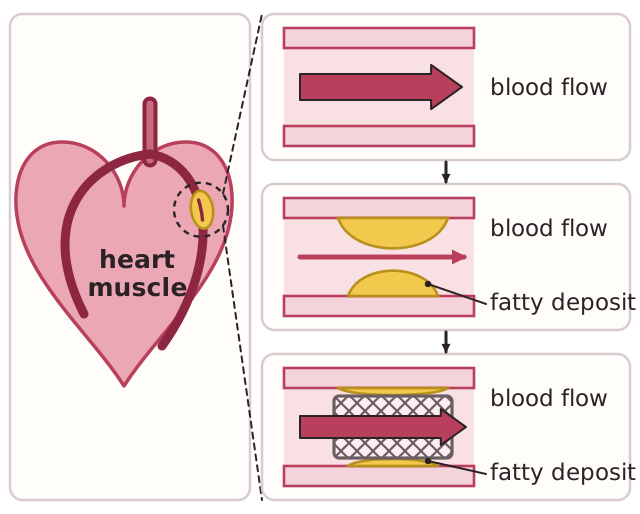
Cardiovascular disease (CVD) affects the heart and blood vessels. In coronary heart disease, fatty deposits build up inside the coronary arteries. This narrows them and reduces the blood flow to the heart muscle. Treatments fall into three groups: lifestyle, medical and surgical.
Lifestyle changes include stopping smoking, eating less saturated fat and salt, taking regular exercise and losing excess weight. They are cheap and have no side effects, but they only work if the patient keeps them up, and they take a long time to have an effect. Medical treatment uses drugs. Statins lower the level of cholesterol in the blood, so fatty deposits build up more slowly. Anticoagulants such as warfarin make the blood clot less easily, and other drugs lower blood pressure. Drugs often have to be taken for life and can have side effects.
Surgical treatment is used when arteries are badly blocked. A stent is a small mesh tube placed in a coronary artery to hold it open. In bypass surgery a section of blood vessel is used to go around the blocked artery. A faulty heart valve can be replaced, and a badly damaged heart can be replaced by a donor heart in a heart transplant. Surgery works fast, but it is expensive and carries risks such as infection, bleeding and, for a transplant, rejection.
To evaluate a treatment, weigh up how well it works, how much it costs, its risks and side effects, and how long the benefit lasts.