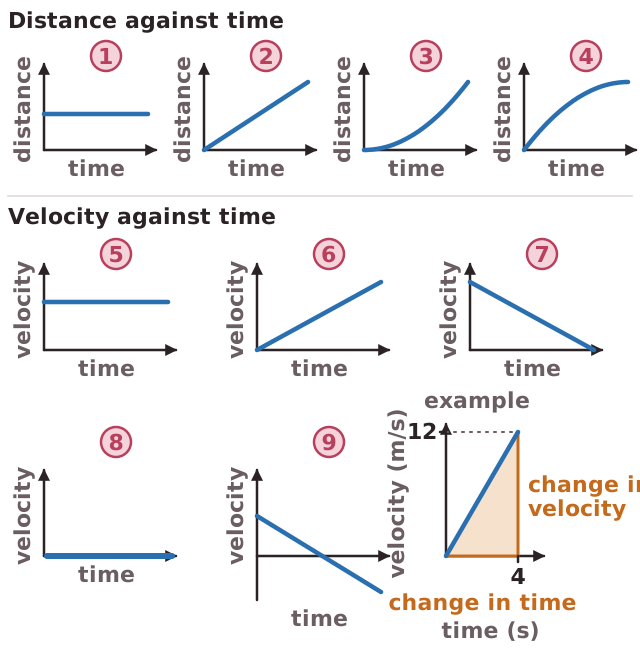
On a distance-time graph the gradient is the speed. A horizontal line means the object is stationary. A straight sloping line means constant speed. A curve that gets steeper shows the object is speeding up, and a curve that gets flatter shows it is slowing down.
On a velocity-time graph the vertical axis is velocity. A horizontal line means constant velocity. A straight line sloping up means constant acceleration, and a straight line sloping down means the object is slowing down. The line lying along the time axis means the velocity is zero. The gradient of a velocity-time graph is the acceleration, found from the change in velocity divided by the time taken. For example, a line from 0 m/s to 12 m/s in 4 s has a gradient of 3 m/s².
If the line on a velocity-time graph goes below the time axis, the velocity is negative, which means the object is moving in the opposite direction. Always check which graph you are looking at, because a horizontal line means stationary on a distance-time graph but constant velocity on a velocity-time graph.