Speed tells you how far an object travels each second. You calculate it using speed = distance ÷ time. With distance in metres and time in seconds, speed is in metres per second, written m/s. If the speed changes, the value you get is the average speed: the total distance divided by the total time. Typical practical work times learners walking or running a measured distance, or trolleys on ramps.
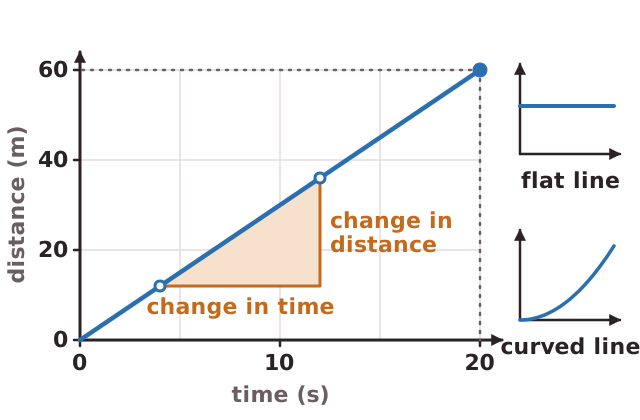
A distance-time graph plots distance up the vertical axis and time along the horizontal axis. A straight sloping line means constant speed. The gradient of the line equals the speed, so a steeper line means a faster object. A horizontal line means the distance is not changing, so the object is stationary. A curved line means the speed is changing.
To find the speed from a straight line, pick two points that are far apart. Work out the change in distance and the change in time, then divide the change in distance by the change in time. For example, a line rising from 0 m at 0 s to 120 m at 20 s has a gradient of 120 ÷ 20 = 6 m/s. Similarly, a swimmer who covers 100 m in 50 s has an average speed of 2 m/s.