Speed tells us only how fast an object moves. Velocity is a vector, so it has both a size (the speed) and a direction. If either the speed or the direction changes, the velocity changes.
An object moving in a circle at constant speed has a changing velocity. Its speed stays the same, but its direction is changing all the time. A changing velocity means the object is accelerating, so the object has acceleration even though its speed does not change.
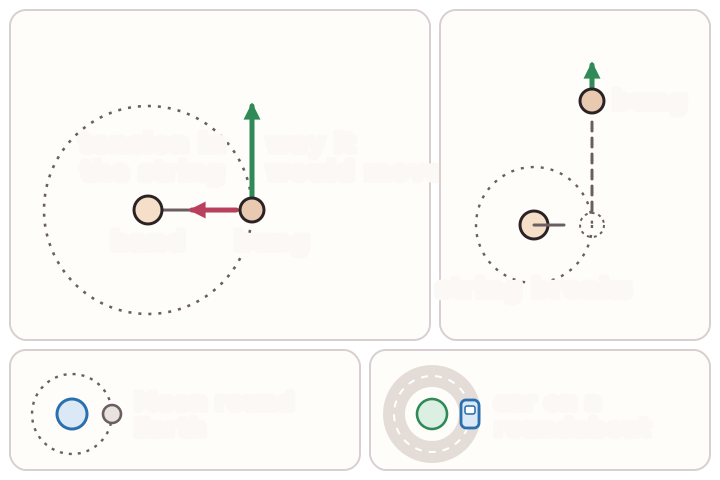
A change in velocity needs a resultant force, and for circular motion this force acts towards the centre of the circle. When a rubber bung is whirled on a string, the tension in the string pulls the bung towards the hand at the centre. If the string breaks, the bung moves off in a straight line. The Moon orbiting the Earth, and a car going round a roundabout, are other examples.