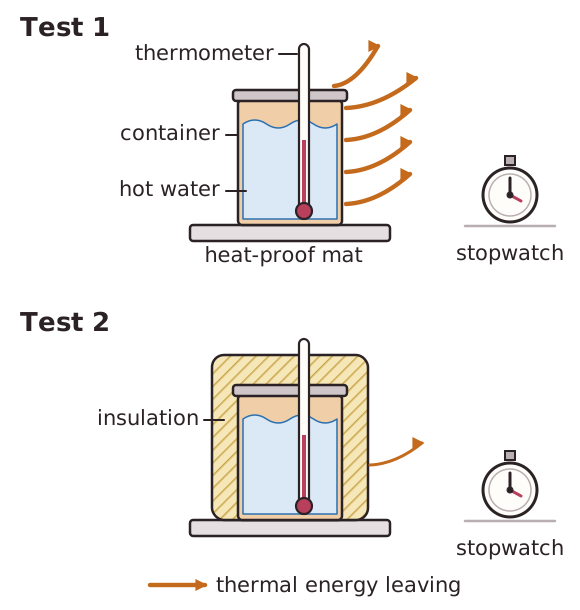
A hot object, or a warm house, loses thermal energy to its colder surroundings. The rate of cooling is how quickly its temperature falls. A fast rate of cooling means the temperature drops a lot in a short time.
The walls matter. Thermal energy is transferred through a wall by conduction. A wall made of a material with a high thermal conductivity, such as copper, lets thermal energy pass through easily, so the object cools quickly. A wall made of a material with a low thermal conductivity, such as wool, foam or air trapped in a cavity, passes it on slowly, so the object cools slowly. Materials with low thermal conductivity are called insulators.
The thickness of the wall matters too. Thermal energy has further to travel through a thick wall than through a thin one, so thicker walls give a slower rate of cooling. A thin wall made of a good conductor gives the fastest cooling of all.
In a typical practical, a copper can is filled with hot water and the temperature is recorded every minute. The test is repeated with the can wrapped in different thicknesses or types of insulation. To keep it a fair test, the volume and starting temperature of the water, and the room temperature, must stay the same. The insulated can cools more slowly than the bare can.