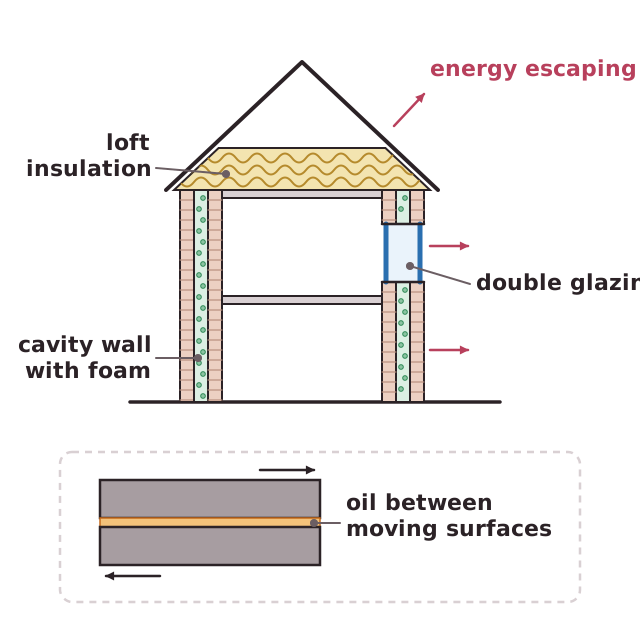
Unwanted energy transfers can be reduced in two main ways. A lubricant, such as oil or grease, is a liquid placed between moving surfaces. It keeps the surfaces apart, so there is less friction. Less friction means less kinetic energy is transferred as thermal energy, so parts stay cooler, wear less and the machine is more efficient.
Thermal insulation reduces the rate at which thermal energy is transferred out of a building. Insulating materials have a low thermal conductivity, so energy passes through them slowly. Loft insulation is made of fibres that trap air, and air is a poor conductor. Cavity walls filled with foam and double glazing, which has a layer of air or gas between two panes, work in the same way.
Both methods cut the energy that is dissipated. An insulated house loses thermal energy more slowly, so it needs less energy from the heating system to stay warm.