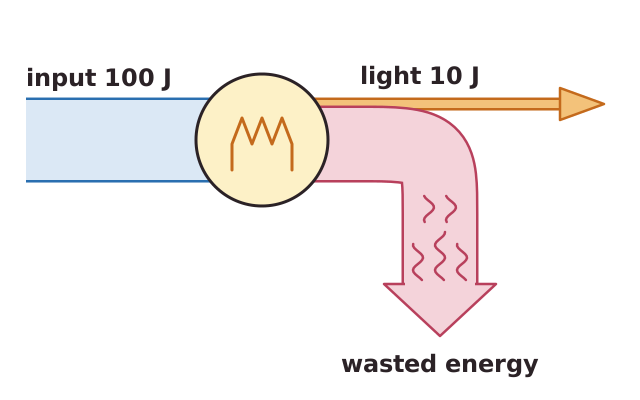
Energy is never created or destroyed. It is only transferred from one store to another. In every transfer, though, some of the energy ends up somewhere you did not want it. We say this energy is dissipated: it spreads out into the surroundings and is stored in less useful ways.
Most dissipated energy is stored as thermal energy in the surroundings, which warms the air a tiny amount. A filament lamp transfers electrical energy to light, but most of it warms the room. A bicycle chain and gears rub together, so friction transfers some kinetic energy as thermal energy. A phone charger gets warm for the same reason.
Dissipated energy is not used up. It still exists, but it is so spread out that we cannot easily use it again. For example, a lamp with an input of 100 J that gives out 10 J of light has dissipated 90 J.