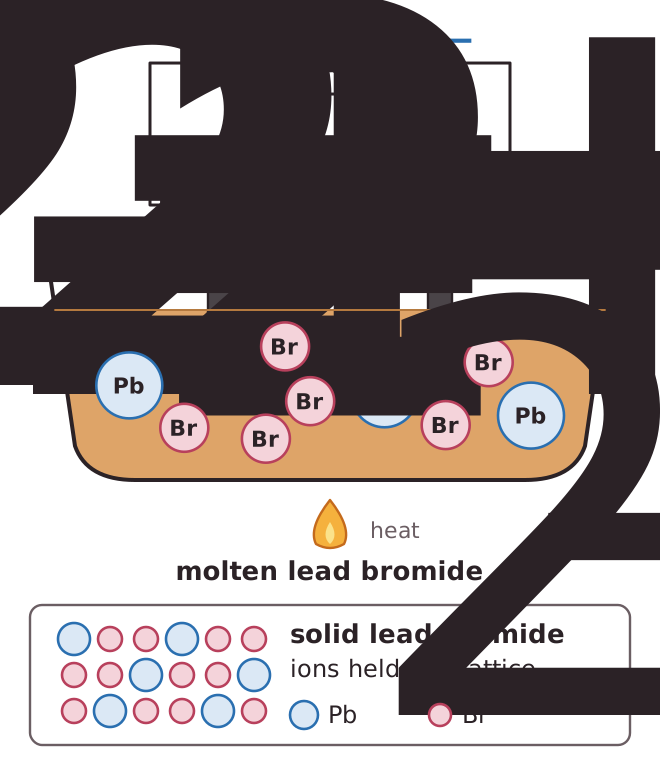
A binary ionic compound contains just two elements, one metal and one non-metal, for example sodium chloride or lead bromide. A solid ionic compound does not conduct electricity, because its ions are held in fixed positions. When the compound is molten, the ions are free to move, so it can be electrolysed.
Only two kinds of ion are present, so the products are easy to predict. The metal ions are cations and move to the cathode, where the metal forms. The non-metal ions are anions and move to the anode, where the non-metal forms.
Molten sodium chloride gives sodium at the cathode and chlorine at the anode. Molten lead bromide, which contains Pb2+ and Br- ions, gives lead at the cathode and bromine at the anode. Molten potassium iodide gives potassium and iodine in the same way. Chlorine and bromine are poisonous, so the experiment is done in a fume cupboard.