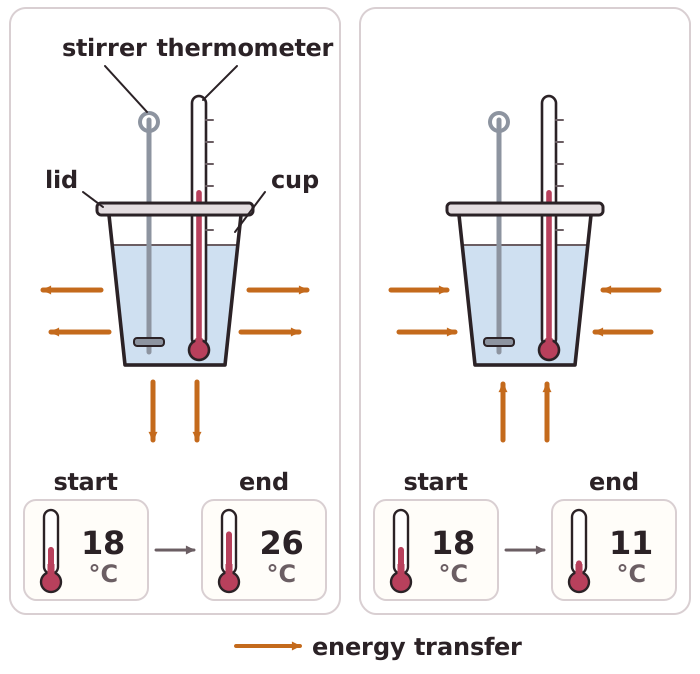
Every chemical reaction transfers energy between the chemicals and their surroundings. Energy is not lost or used up. It moves from one place to another. We can tell which way it moves by measuring the temperature of the surroundings, such as the solution in a beaker.
In an exothermic reaction, energy is transferred to the surroundings. The surroundings get hotter, so the temperature rises. Burning fuels, neutralisation and respiration are exothermic. Hand warmers and self-heating cans use exothermic reactions.
In an endothermic reaction, energy is taken in from the surroundings. The surroundings get colder, so the temperature falls. Thermal decomposition and the reaction of citric acid with sodium hydrogencarbonate are endothermic. Instant cold packs use an endothermic change.
To investigate, put a known volume of one reaction solution in a polystyrene cup, record its starting temperature, add the second reagent, stir, and record the highest or lowest temperature reached. The temperature change is the final temperature minus the starting temperature. A fall gives a negative temperature change. A rise shows an exothermic reaction and a fall shows an endothermic reaction. The polystyrene cup and a lid reduce energy loss to the air.