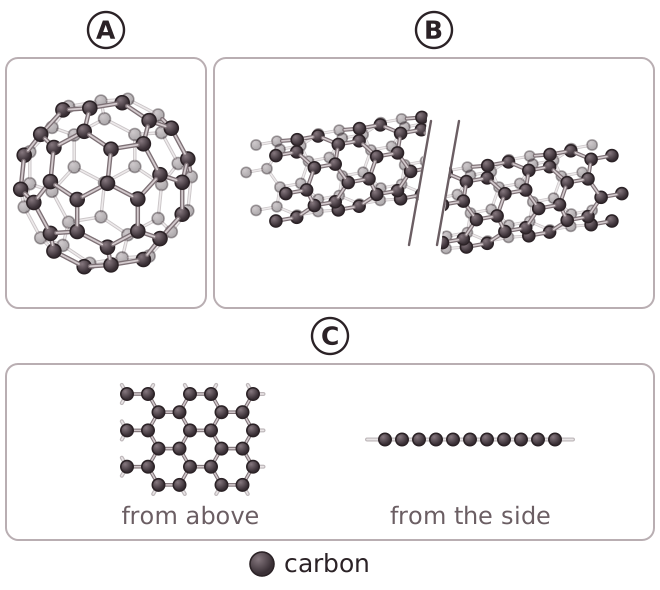
Fullerenes are molecules made only of carbon atoms, arranged in hexagons and sometimes pentagons, forming hollow shapes. The first to be discovered was Buckminsterfullerene (C60), a hollow sphere of 60 carbon atoms. Other fullerenes are nanotubes, which are carbon atoms arranged in long, thin hollow cylinders.
Carbon atoms in a fullerene are held together by strong covalent bonds. Each carbon atom is bonded to three others, so one outer electron per atom is delocalised and can move. This means fullerenes can conduct electricity. C60 is a simple molecule, and the forces between separate molecules are weak, so it is soft and has a lower melting point than diamond. A nanotube is very strong because of its strong covalent bonds, and it is very long compared with its width.
Graphene is a single layer of graphite, only one atom thick. Because each carbon atom has a delocalised electron, graphene is an excellent conductor of electricity. The strong covalent bonds make it very strong, yet it is also very light.