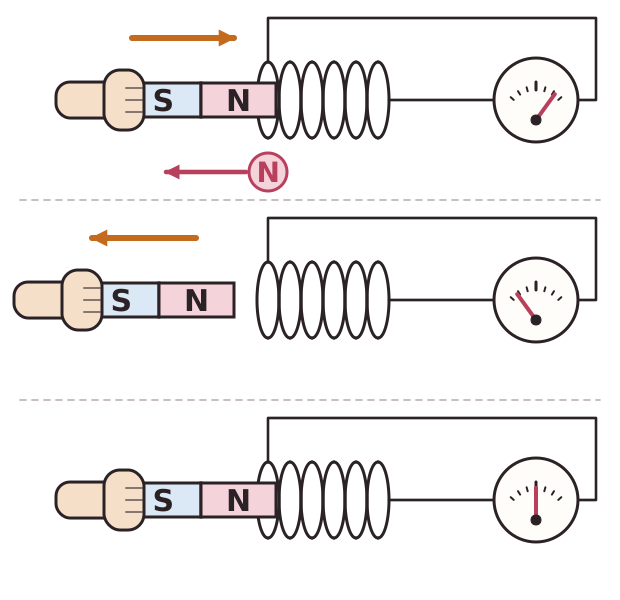
When a wire moves through a magnetic field, or a magnet moves into or out of a coil, a potential difference is made across the wire or coil. This is called an induced potential difference. If the circuit is complete, it makes a current flow. Nothing is induced if the wire and the magnetic field are held still, with no movement between them.
The size of the induced potential difference increases if the magnet or wire moves faster, if a stronger magnet is used, or if the coil has more turns. A coil with a larger area also gives a bigger effect. The direction of the induced potential difference reverses if the direction of movement reverses, or if the magnet is turned so the other pole goes in first.
The induced current has its own magnetic field. This field always opposes the change that caused it. For example, when the north pole of a magnet is pushed into a coil, the coil makes a north pole at that end, which repels the magnet. This is why you have to do work to push the magnet in.