The living things in a community are affected by abiotic (non-living) factors and by biotic (living) factors. A change in either can alter the size of a population.
Abiotic factors include temperature, light, water and pollutants. Low temperature slows the chemical reactions in organisms, so growth is slow, and many species can only survive in a certain temperature range. Light is needed for photosynthesis, so plants in deep shade grow slowly and fewer of them survive. Water is needed by every organism, and where it is scarce, as in a desert, only specialised species can live. Pollutants are harmful substances added to the environment. For example, sulfur dioxide from burning fossil fuels is a pollutant, and few lichens grow where the air contains a lot of it.
Biotic factors include competition and predation. Competition happens when organisms need the same limited resources, such as food, water, light, space or mates. Organisms that are better adapted survive and breed. Plants compete for light, water and mineral ions, and animals compete for food, space and mates.
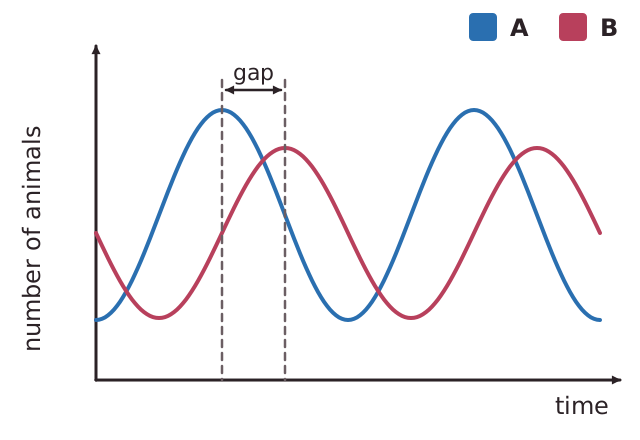
Predation is when a predator eats its prey. In a predator-prey relationship the two populations rise and fall in cycles. When prey numbers rise, there is more food, so predators increase. More predators eat more prey, so prey numbers fall. Then predators have less food, so their numbers fall too, and the cycle repeats.