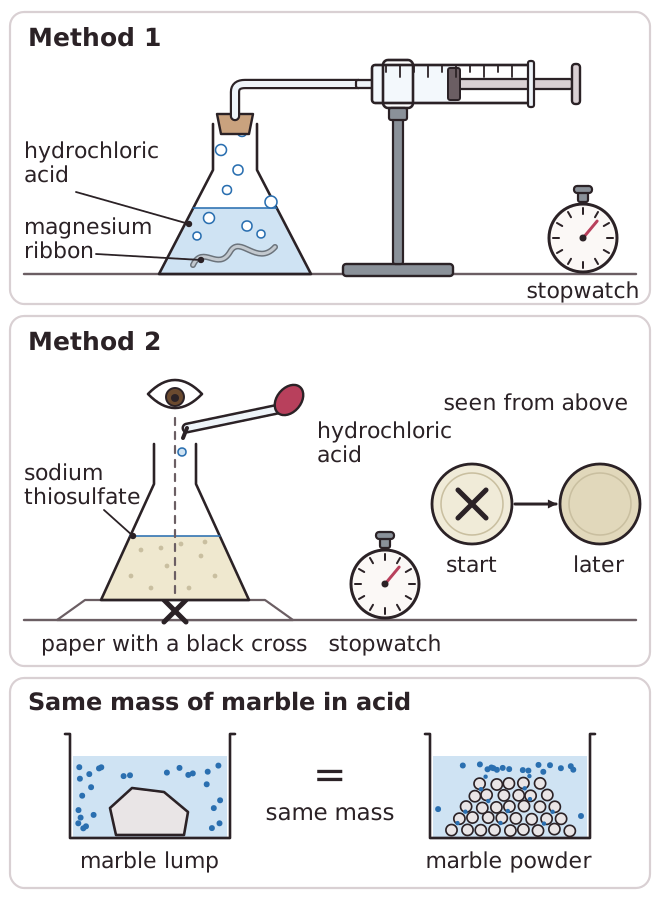
Five factors change the rate of a chemical reaction. Increasing the concentration of reactants in solution makes the reaction faster. Increasing the pressure of reacting gases makes it faster. Increasing the surface area of a solid reactant makes it faster, for example a powder reacts faster than the same mass of large lumps. Increasing the temperature makes it faster. Adding a catalyst also makes it faster.
In required practical 11 you investigate how concentration affects the rate of reaction. Start by making a hypothesis, for example that a higher concentration will give a faster rate. There are two usual methods. In the first, you measure the volume of gas produced over time, for example magnesium reacting with different concentrations of hydrochloric acid, with the gas collected in a gas syringe.
In the second method, you watch for a change in colour or turbidity. For example, sodium thiosulfate solution reacts with hydrochloric acid to form a solid that makes the mixture go cloudy. You time how long it takes for a cross under the flask to disappear. A shorter time means a faster rate.
Only the concentration is changed. Everything else is kept the same: the temperature, the volumes of the solutions, and the mass and form of any solid. If the concentration is higher, the reaction takes a shorter time and the rate is faster.