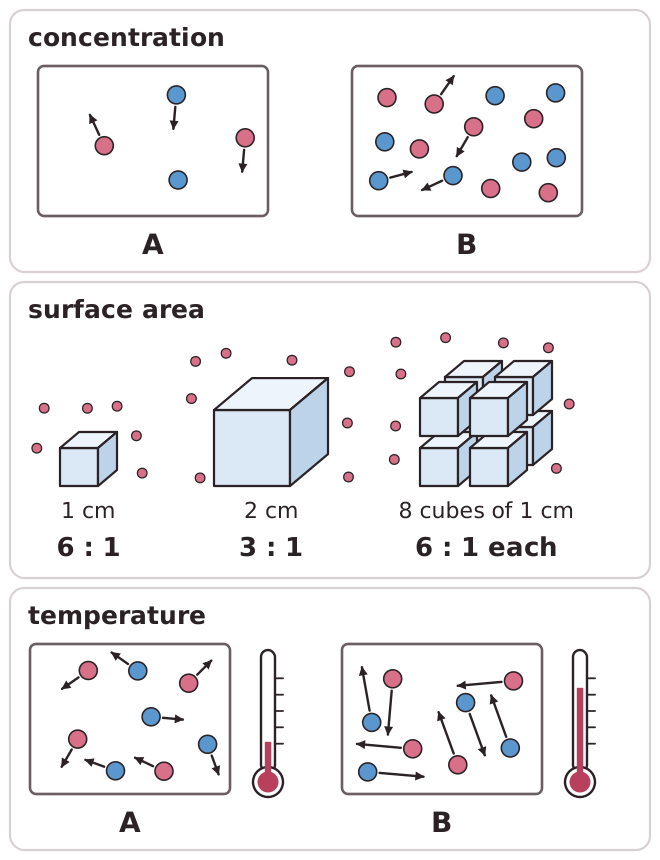
Collision theory explains how factors change the rate of reaction. Chemical reactions can only happen when reacting particles collide with each other, and only if they collide with enough energy. The minimum amount of energy particles must have to react is the activation energy. Many collisions do not lead to a reaction because the particles do not have this much energy.
Increasing the concentration of a solution puts more particles in the same volume. Increasing the pressure of a gas does the same. In both cases collisions are more frequent, so the rate of reaction increases. A simple proportion works here: if the concentration is doubled there are twice as many particles in the same volume, collisions are twice as frequent, and the rate is doubled.
Cutting a solid into smaller pieces increases its surface area compared with its volume, so the surface area to volume ratio is larger. More particles of the solid are exposed to the other reactant, so there are more collisions and the rate increases.
Increasing the temperature makes the particles move faster. They collide more frequently, and the collisions are more energetic, so more of them reach the activation energy. Both effects make the rate increase.