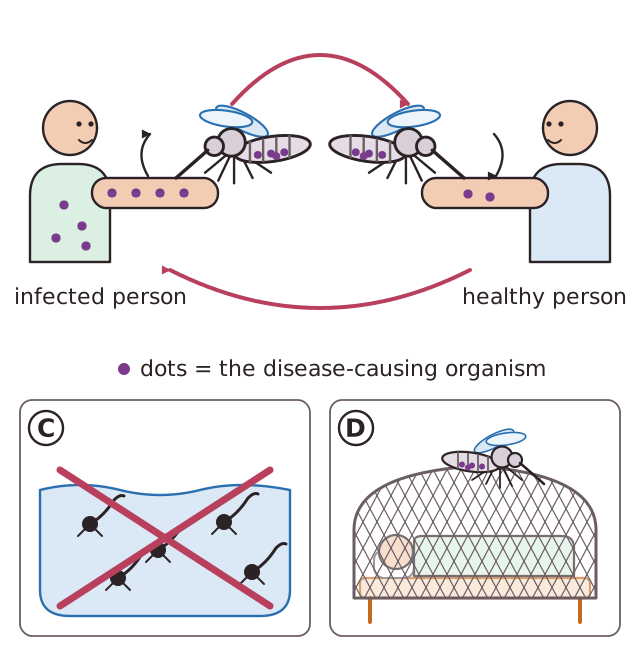
The pathogens that cause malaria are protists. The malarial protist has a life cycle that includes the mosquito. Mosquitos pick up the protist when they feed on an infected person, and they then pass it on to other people when they bite them.
An organism that carries a pathogen from one host to another without getting the disease itself is called a vector. The mosquito is the vector for malaria.
Malaria causes recurrent episodes of fever and can be fatal. Because the pathogen depends on the mosquito to spread, the spread of malaria is controlled by stopping the mosquitos from breeding, and by using mosquito nets to avoid being bitten.